The Quantum Vacuum Explained
There's a massive amount of virtual interactions going on in the vacuum, each producing entanglement. It's a foaming mess of activity.
An example is: photon --> electron + positron --> photon (and repeat). Where all the particles are virtual and the electron postron pair are strongly entangled.
If any of these "entanglement bubbles" interact with a classical object the entanglement is broken and the particles involved change from virtual to real.
Photons have a hard time plowing through this mess and so are limited to the speed c. Which on a cosmic scale is incredibly slow.
Acceleration plays a key role and seems to show up everywhere. Resistance to acceleration is what we call mass. And as per General Relativity at a given point in space acceleration cannot be distinguished from gravity.
The vacuum supports several fields including electromagnetic (electron positron pairs) and also the Higgs field. The Higgs field provides resistance to acceleration and thus gives particles their mass. It only "turns on" when a particle tries to accelerate. It does not seem to interact with particles travelling at constant velocity.
Not all particles feel the Higgs field. The photon does not and thus has no mass. It also travels at a fixed speed that's totally independent of the motion of the source or of the observer. So far there's no explanation for this, but it's clearly another clue to vacuum structure.
Disclaimer: This is not intended as professional advice. It's for informational purposes only.
Content written and posted by Ken Abbott abbottsystems@gmail.com
Like this post? Please share it by clicking one of the share buttons below!
Class Central - Go to University without leaving home
Class Central - Go to University without leaving home
Class Central lists over 250,000 courses at top Universities around the world.
They offer a massive selection of online courses. Take a course without leaving home.
Class Central
Content written and posted by Ken Abbott abbottsystems@gmail.com
Like this post? Please share it by clicking one of the share buttons below!
Class Central lists over 250,000 courses at top Universities around the world.
They offer a massive selection of online courses. Take a course without leaving home.
Class Central
Content written and posted by Ken Abbott abbottsystems@gmail.com
Like this post? Please share it by clicking one of the share buttons below!
Pistachios - Amazing food
Pistachios - Amazing food
Pistachios are considered a nutrient-dense food. They offer a fantastic mix of healthy fats, protein, fiber, and essential vitamins and minerals.
Here is a breakdown of the key health benefits:
Top Health Benefits of Pistachios
Heart Health Support: They are rich in monounsaturated and polyunsaturated fats (the "healthy" kind), which can help lower LDL ("bad") cholesterol and reduce the risk of heart disease.
They are an excellent source of Potassium and contain the amino acid L-arginine, which can help support healthy blood pressure and blood vessel function.
High in Antioxidants:
Pistachios are packed with antioxidants, including lutein and zeaxanthin. These compounds are especially important for eye health, helping to protect against age-related macular degeneration and damage from blue light.
Weight Management:
They offer a great combination of protein (about 6g per ounce) and fiber (about 3g per ounce), which helps you feel full and satisfied, making them an excellent snack for managing appetite and weight.
Blood Sugar Regulation:
Pistachios have a low glycemic index, meaning they don't cause major spikes in blood sugar. Their fiber, healthy fats, and antioxidants all contribute to healthy blood sugar levels.
Gut Health:
The fiber in pistachios acts as a prebiotic, feeding the beneficial bacteria in your gut and helping to maintain a healthy digestive system.
Nutrient Powerhouse:
One serving (about 49 kernels) is an excellent source of Vitamin B6, which is vital for immune function and nerve health, and Copper, which supports iron absorption. Key Considerations Portion Control: Like all nuts, pistachios are calorie-dense. A standard serving size is about 1 ounce (or 49 kernels).
Sodium: To maximize health benefits, it's best to choose unsalted or lightly salted varieties to keep your sodium intake in check.
HELP OTHERS: Please post this to your network.
The URL is https://mathnumber.blogspot.com/2025/12/ice-your-rights.html
Tech Notes:
Disclaimer: This is not intended as legal advice. It's for informational purposes only.
Content written and posted by Ken Abbott abbottsystems@gmail.com
Like this post? Please share it by clicking one of the share buttons below!
Pistachios are considered a nutrient-dense food. They offer a fantastic mix of healthy fats, protein, fiber, and essential vitamins and minerals.
Here is a breakdown of the key health benefits:
Top Health Benefits of Pistachios
Heart Health Support: They are rich in monounsaturated and polyunsaturated fats (the "healthy" kind), which can help lower LDL ("bad") cholesterol and reduce the risk of heart disease.
They are an excellent source of Potassium and contain the amino acid L-arginine, which can help support healthy blood pressure and blood vessel function.
High in Antioxidants:
Pistachios are packed with antioxidants, including lutein and zeaxanthin. These compounds are especially important for eye health, helping to protect against age-related macular degeneration and damage from blue light.
Weight Management:
They offer a great combination of protein (about 6g per ounce) and fiber (about 3g per ounce), which helps you feel full and satisfied, making them an excellent snack for managing appetite and weight.
Blood Sugar Regulation:
Pistachios have a low glycemic index, meaning they don't cause major spikes in blood sugar. Their fiber, healthy fats, and antioxidants all contribute to healthy blood sugar levels.
Gut Health:
The fiber in pistachios acts as a prebiotic, feeding the beneficial bacteria in your gut and helping to maintain a healthy digestive system.
Nutrient Powerhouse:
One serving (about 49 kernels) is an excellent source of Vitamin B6, which is vital for immune function and nerve health, and Copper, which supports iron absorption. Key Considerations Portion Control: Like all nuts, pistachios are calorie-dense. A standard serving size is about 1 ounce (or 49 kernels).
Sodium: To maximize health benefits, it's best to choose unsalted or lightly salted varieties to keep your sodium intake in check.
HELP OTHERS: Please post this to your network.
The URL is https://mathnumber.blogspot.com/2025/12/ice-your-rights.html
Tech Notes:
Disclaimer: This is not intended as legal advice. It's for informational purposes only.
Content written and posted by Ken Abbott abbottsystems@gmail.com
Like this post? Please share it by clicking one of the share buttons below!
ICE - Your Rights
ICE - Your Rights
Dealing with Immigration and Customs Enforcement (ICE) can be intimidating, but it's crucial to remember that all individuals in the US, regardless of immigration status, have Constitutional Rights. When dealing with ICE agents remain calm and polite at all times.
Here are your essential rights..
Entry to your house
You can refuse to open the door. You can speak to the agents through the door or a closed window. ICE agents cannot enter your house without a warrant. And that means a Bench Warrant (one signed by a Judge), an Administrative Warrant (one signed by an ICE agent) is not enough.
If agents claim to have a warrant, ask them to slide it under the door or hold it up to a window so you can read it.
Look carefully to ensure the warrant is signed by a Judge (not an ICE agent) and that it has the correct name and address on it. If it is an Administrative Warrant, they cannot enter.
While being questioned
You are not required to answer any questions about your immigration status, birthplace, citizenship, or how you entered the US.
Simply state clearly, "I choose to remain silent," or "I wish to speak with my lawyer." Do not sign any papers without consulting an attorney. Remain calm and polite, but firm.
You can ask for a lawyer at any time. Once you request a lawyer, agents should stop questioning you. The government does not provide free attorneys for immigration hearings, but you have the right to hire one.
If arrested or detained
You have the right to know why you are being detained or arrested. You have the right to ask for the name, badge number, and agency of the officer detaining you. You have the right to contact your home country's consulate or embassy.
Important Caveats
If you are stopped in a public place (street, bus station, airport), ICE agents have more leeway in brief questioning, but you still have the right to remain silent.
If you are stopped at or near an international border or port of entry, border patrol agents have expanded powers of search and question.
If you are a lawful permanent resident (Green Card holder), you are required to carry proof of your status (Form I-551) at all times.
HELP OTHERS: Please post this to your network.
The URL is https://mathnumber.blogspot.com/2025/12/ice-your-rights.html
If you are a bystander to an ICE arrest
Being a bystander to an ICE arrest can be a stressful situation. It is critical to know your rights and take action that is safe, legal, and supportive. Never interfere with the agents duties. To do so is a serious offense and could land you in jail.
Your presence and documentation can be extremely valuable to the detained person's legal case later on.
Observe and Document (The Most Critical Step)
As a bystander in a public place, you have a First Amendment right to observe and record law enforcement officers, including ICE and Border Patrol, as long as you do not interfere with their actions.
Stay Safe and Calm. Do not panic or run. Keep a safe distance (at least 20 feet) to avoid being accused of obstruction or interference.
Record the Incident. Use your phone to video the entire interaction.
Capture Details. Record the agents faces, uniforms, and vehicles (including license plates and identifying numbers).
Ask for Identification. While recording, try to audibly ask for the officers names, badge numbers, and agency (ICE, ERO, or Border Patrol).
Do Not Interfere. Absolutely do not physically block, touch, or obstruct the agents or the vehicle they use for the arrest. Do not step into the arrest zone. Interference can result in your own arrest and criminal charges.
Gather Information for the Detained Person. If you can safely do so without getting close, try to gather information that will help the detained person's family or lawyer.
Get Key Information. If possible, ask the detained person for:
Their name and date of birth.
A phone number for a lawyer or family member.
Shout a Reminder of Rights. If the person is being questioned, you can loudly and clearly state, "You have the right to remain silent!" and "You have the right to an attorney!"
Ask About Property. If the person leaves behind a car, wallet, phone, keys, or other essential property, ask them if they want you to call someone to secure it. Do not touch the person's property without their explicit permission.
Reporting the Incident
The information you gather is useless unless it gets to the right people quickly. Call a Rapid Response Network (Hotline). This is the single most important action after documenting. Many communities have dedicated rapid response hotlines run by immigrant advocacy groups or legal aid services.
Report Immediately. Call the hotline and provide them with all the details you gathered: where and when the arrest happened, what vehicle was used, and the detained person's identity (if known).
Secure the Evidence
Upload your video and photos to the cloud or email them to a trusted contact. Many organizations recommend avoiding live-streaming to prevent the video from being lost if the phone is confiscated.
Write It Down. Immediately write down a chronological narrative of the event, including exact times, locations, and direct quotes from the agents or the person detained.
Key Safety Reminders
Do NOT Ask About Status: Never ask the detained person about their immigration status, birthplace, or how they entered the country. This information is private and could potentially harm their case.
Do NOT Accept Documents. Do not accept any official documents from the ICE agent or the detained person, as this could draw you into the legal situation.
Prioritize Your Safety. If agents tell you to step back, comply immediately. Your ability to help is completely dependent on staying safe and out of legal trouble yourself.
If things turn nasty
Meaning the person being arrested decides to fight the ICE officers. You may be tempted to help. Do not help. Just keep calm, stay at a good distance and keep your video rolling. The basic rule still applies, Absolutely do not physically block, touch, or obstruct the agents or the vehicle they use for the arrest. Do not step into the arrest zone. Interference can result in your own arrest and criminal charges.
HELP OTHERS: Please post this to your network.
The URL is https://mathnumber.blogspot.com/2025/12/ice-your-rights.html
Tech Notes:
Disclaimer: This is not intended as legal advice. It's for informational purposes only.
Content written and posted by Ken Abbott abbottsystems@gmail.com
Like this post? Please share it by clicking one of the share buttons below!
Dealing with Immigration and Customs Enforcement (ICE) can be intimidating, but it's crucial to remember that all individuals in the US, regardless of immigration status, have Constitutional Rights. When dealing with ICE agents remain calm and polite at all times.
Here are your essential rights..
Entry to your house
You can refuse to open the door. You can speak to the agents through the door or a closed window. ICE agents cannot enter your house without a warrant. And that means a Bench Warrant (one signed by a Judge), an Administrative Warrant (one signed by an ICE agent) is not enough.
If agents claim to have a warrant, ask them to slide it under the door or hold it up to a window so you can read it.
Look carefully to ensure the warrant is signed by a Judge (not an ICE agent) and that it has the correct name and address on it. If it is an Administrative Warrant, they cannot enter.
While being questioned
You are not required to answer any questions about your immigration status, birthplace, citizenship, or how you entered the US.
Simply state clearly, "I choose to remain silent," or "I wish to speak with my lawyer." Do not sign any papers without consulting an attorney. Remain calm and polite, but firm.
You can ask for a lawyer at any time. Once you request a lawyer, agents should stop questioning you. The government does not provide free attorneys for immigration hearings, but you have the right to hire one.
If arrested or detained
You have the right to know why you are being detained or arrested. You have the right to ask for the name, badge number, and agency of the officer detaining you. You have the right to contact your home country's consulate or embassy.
Important Caveats
If you are stopped in a public place (street, bus station, airport), ICE agents have more leeway in brief questioning, but you still have the right to remain silent.
If you are stopped at or near an international border or port of entry, border patrol agents have expanded powers of search and question.
If you are a lawful permanent resident (Green Card holder), you are required to carry proof of your status (Form I-551) at all times.
HELP OTHERS: Please post this to your network.
The URL is https://mathnumber.blogspot.com/2025/12/ice-your-rights.html
If you are a bystander to an ICE arrest
Being a bystander to an ICE arrest can be a stressful situation. It is critical to know your rights and take action that is safe, legal, and supportive. Never interfere with the agents duties. To do so is a serious offense and could land you in jail.
Your presence and documentation can be extremely valuable to the detained person's legal case later on.
Observe and Document (The Most Critical Step)
As a bystander in a public place, you have a First Amendment right to observe and record law enforcement officers, including ICE and Border Patrol, as long as you do not interfere with their actions.
Stay Safe and Calm. Do not panic or run. Keep a safe distance (at least 20 feet) to avoid being accused of obstruction or interference.
Record the Incident. Use your phone to video the entire interaction.
Capture Details. Record the agents faces, uniforms, and vehicles (including license plates and identifying numbers).
Ask for Identification. While recording, try to audibly ask for the officers names, badge numbers, and agency (ICE, ERO, or Border Patrol).
Do Not Interfere. Absolutely do not physically block, touch, or obstruct the agents or the vehicle they use for the arrest. Do not step into the arrest zone. Interference can result in your own arrest and criminal charges.
Gather Information for the Detained Person. If you can safely do so without getting close, try to gather information that will help the detained person's family or lawyer.
Get Key Information. If possible, ask the detained person for:
Their name and date of birth.
A phone number for a lawyer or family member.
Shout a Reminder of Rights. If the person is being questioned, you can loudly and clearly state, "You have the right to remain silent!" and "You have the right to an attorney!"
Ask About Property. If the person leaves behind a car, wallet, phone, keys, or other essential property, ask them if they want you to call someone to secure it. Do not touch the person's property without their explicit permission.
Reporting the Incident
The information you gather is useless unless it gets to the right people quickly. Call a Rapid Response Network (Hotline). This is the single most important action after documenting. Many communities have dedicated rapid response hotlines run by immigrant advocacy groups or legal aid services.
Report Immediately. Call the hotline and provide them with all the details you gathered: where and when the arrest happened, what vehicle was used, and the detained person's identity (if known).
Secure the Evidence
Upload your video and photos to the cloud or email them to a trusted contact. Many organizations recommend avoiding live-streaming to prevent the video from being lost if the phone is confiscated.
Write It Down. Immediately write down a chronological narrative of the event, including exact times, locations, and direct quotes from the agents or the person detained.
Key Safety Reminders
Do NOT Ask About Status: Never ask the detained person about their immigration status, birthplace, or how they entered the country. This information is private and could potentially harm their case.
Do NOT Accept Documents. Do not accept any official documents from the ICE agent or the detained person, as this could draw you into the legal situation.
Prioritize Your Safety. If agents tell you to step back, comply immediately. Your ability to help is completely dependent on staying safe and out of legal trouble yourself.
If things turn nasty
Meaning the person being arrested decides to fight the ICE officers. You may be tempted to help. Do not help. Just keep calm, stay at a good distance and keep your video rolling. The basic rule still applies, Absolutely do not physically block, touch, or obstruct the agents or the vehicle they use for the arrest. Do not step into the arrest zone. Interference can result in your own arrest and criminal charges.
HELP OTHERS: Please post this to your network.
The URL is https://mathnumber.blogspot.com/2025/12/ice-your-rights.html
Tech Notes:
Disclaimer: This is not intended as legal advice. It's for informational purposes only.
Content written and posted by Ken Abbott abbottsystems@gmail.com
Like this post? Please share it by clicking one of the share buttons below!
Quantum Entanglement Explained
Quantum Entanglement Explained
Einstein called it "spooky action at a distance". He was wrong. The key to understanding entanglement is simple.. there is no distance.
Sometimes building a model can help understand a phenomenon. So suppose you have two elementary particles that arose from the same quantum process. So they are a unified quantum system.
Let's denote that by placing a sphere around them. A bubble if you like. So the system is totally isolated from its environment.
Now postulate that inside the bubble, distance (as we define it) simply does not exist.
For example: suppose one particle moves 100 miles away and the bubble does not burst, so this is still a single quantum system and the 100 miles means nothing. The two particles are still a single unified system. That's entanglement.
But if the bubble bursts (by interaction with the environment, and that includes any measurement on the system) this thing is no longer a unified quantum system but simply two unrelated particles. And our usual definition of distance suddenly applies.
Here's a specific example:
Let's produce 2 photons by collideing an electron and a positron electron+positron-->2 photons. The electron and positron first form a bound state. Then this state decays into 2 photons. So the photons are entangled.
The photons travel at speed c in opposite directions, so they are soon separated by a vast distance, but still entangled (provided their bubble does not burst).
Now after many miles I measure the spin of one of the photons, and you measure the spin of the other. Once I get my answer I know your answer without you telling me.
That's entanglement.
It's not mysterious and certainly not "spooky" as Einstein said.
Tech Notes:
Note that we can never know what's going on inside the bubble. Never ever. It's a catch 22. To know what's going on we would need to make a measurement. But making a measurement bursts the bubble.
Entanglement teaches us an important lesson. At the quantum level distance is not what we think it is.
Disclaimer: This is not intended as professional advice. It's for informational purposes only.
Content written and posted by Ken Abbott abbottsystems@gmail.com
Like this post? Please share it by clicking one of the share buttons below!
Einstein called it "spooky action at a distance". He was wrong. The key to understanding entanglement is simple.. there is no distance.
Sometimes building a model can help understand a phenomenon. So suppose you have two elementary particles that arose from the same quantum process. So they are a unified quantum system.
Let's denote that by placing a sphere around them. A bubble if you like. So the system is totally isolated from its environment.
Now postulate that inside the bubble, distance (as we define it) simply does not exist.
For example: suppose one particle moves 100 miles away and the bubble does not burst, so this is still a single quantum system and the 100 miles means nothing. The two particles are still a single unified system. That's entanglement.
But if the bubble bursts (by interaction with the environment, and that includes any measurement on the system) this thing is no longer a unified quantum system but simply two unrelated particles. And our usual definition of distance suddenly applies.
Here's a specific example:
Let's produce 2 photons by collideing an electron and a positron electron+positron-->2 photons. The electron and positron first form a bound state. Then this state decays into 2 photons. So the photons are entangled.
The photons travel at speed c in opposite directions, so they are soon separated by a vast distance, but still entangled (provided their bubble does not burst).
Now after many miles I measure the spin of one of the photons, and you measure the spin of the other. Once I get my answer I know your answer without you telling me.
That's entanglement.
It's not mysterious and certainly not "spooky" as Einstein said.
Tech Notes:
Note that we can never know what's going on inside the bubble. Never ever. It's a catch 22. To know what's going on we would need to make a measurement. But making a measurement bursts the bubble.
Entanglement teaches us an important lesson. At the quantum level distance is not what we think it is.
Disclaimer: This is not intended as professional advice. It's for informational purposes only.
Content written and posted by Ken Abbott abbottsystems@gmail.com
Like this post? Please share it by clicking one of the share buttons below!
Ken's Saffron Rice
Ken's Saffron Rice

Finely chop some onion, ginger and garlic. Saute in a small amount of olive oil in a heavy casserole. Add a few cloves, some cardamon seeds from freshly crushed cardamon pods and a cup of rice. Saute for 2 more minutes and stir.
Add some fresh ground pepper, a pinch of salt and a pinch of paprika.
Put a generous pinch saffron in a cup and pour on boiling water. Let stand for a few minutes, then add water to fill the cup. Pour into the casserole.
Fill a cup with a mixture of chicken stock and white wine and add to the casserole. Stir.
Simmer with the lid off the casserole until the rice is cooked.
Tech Notes:
Amazon sells saffron threads, cloves and cardamon pods.
Not a rice fan? Use Orzo instead. Orzo is pasta.
Content written and posted by Ken Abbott abbottsystems@gmail.com

Finely chop some onion, ginger and garlic. Saute in a small amount of olive oil in a heavy casserole. Add a few cloves, some cardamon seeds from freshly crushed cardamon pods and a cup of rice. Saute for 2 more minutes and stir.
Add some fresh ground pepper, a pinch of salt and a pinch of paprika.
Put a generous pinch saffron in a cup and pour on boiling water. Let stand for a few minutes, then add water to fill the cup. Pour into the casserole.
Fill a cup with a mixture of chicken stock and white wine and add to the casserole. Stir.
Simmer with the lid off the casserole until the rice is cooked.
Tech Notes:
Amazon sells saffron threads, cloves and cardamon pods.
Not a rice fan? Use Orzo instead. Orzo is pasta.
Content written and posted by Ken Abbott abbottsystems@gmail.com
AI and the Spinning Jenny
AI and the Spinning Jenny
Introduced in 1764 the spinning jenny was an early multiple-spindle machine used for spinning wool or cotton, and it was one of the key inventions that kicked off the Industrial Revolution.
It drastically increased the productivity of spinning yarn by allowing a single worker to operate multiple spindles simultaneously, replacing the traditional single-spindle spinning wheel.
The Invention and Introduction
The spinning jenny was invented by James Hargreaves, a British carpenter and weaver. The spinning jenny was strongly opposed by manual textile workers in England, particularly the hand spinners and weavers.
This opposition led to protests and even physical attacks on the machines.
Why Workers Opposed the Spinning Jenny
The opposition stemmed from the spinning jenny's immediate and dramatic impact on employment and wages in the textile industry:
Job Displacement
The primary concern was technological unemployment. Before the jenny, spinning was done using a single-spindle wheel. The spinning jenny allowed one worker (often a woman working from home) to spin multiple threads at once (initially 8, later up to 120).
This instantly made the traditional hand spinners obsolete, as their output could not compete with the new machines, leading to mass job displacement.
Wage Reduction
As the supply of spun yarn skyrocketed, driven by the machine's efficiency, the price of yarn dropped dramatically.
This forced any remaining hand spinners to accept drastically reduced wages just to compete, severely threatening the livelihoods of entire families who depended on the income from spinning.
Attacks on Property
The resistance was sometimes violent, particularly in the initial years of the Industrial Revolution when the factory system was emerging:
Riots and Destruction: James Hargreaves himself was forced to move from his original home in Lancashire after local spinners, fearing for their jobs, broke into his house and destroyed his spinning jennies.
Luddism Precursor: This type of anti-technology protest preceded the more organized Luddite movement (which opposed power looms and stocking frames) but shared the same core motivation: a defense against machines that threatened traditional craftsmanship and wages.
In short, the opposition was driven by economic necessity—the fear that a highly efficient machine would take away their means of supporting their families.
Tech Notes:
Disclaimer: This is not intended as professional advice. It's for informational purposes only.
Content written and posted by Ken Abbott abbottsystems@gmail.com
Like this post? Please share it by clicking one of the share buttons below!
Introduced in 1764 the spinning jenny was an early multiple-spindle machine used for spinning wool or cotton, and it was one of the key inventions that kicked off the Industrial Revolution.
It drastically increased the productivity of spinning yarn by allowing a single worker to operate multiple spindles simultaneously, replacing the traditional single-spindle spinning wheel.
The Invention and Introduction
The spinning jenny was invented by James Hargreaves, a British carpenter and weaver. The spinning jenny was strongly opposed by manual textile workers in England, particularly the hand spinners and weavers.
This opposition led to protests and even physical attacks on the machines.
Why Workers Opposed the Spinning Jenny
The opposition stemmed from the spinning jenny's immediate and dramatic impact on employment and wages in the textile industry:
Job Displacement
The primary concern was technological unemployment. Before the jenny, spinning was done using a single-spindle wheel. The spinning jenny allowed one worker (often a woman working from home) to spin multiple threads at once (initially 8, later up to 120).
This instantly made the traditional hand spinners obsolete, as their output could not compete with the new machines, leading to mass job displacement.
Wage Reduction
As the supply of spun yarn skyrocketed, driven by the machine's efficiency, the price of yarn dropped dramatically.
This forced any remaining hand spinners to accept drastically reduced wages just to compete, severely threatening the livelihoods of entire families who depended on the income from spinning.
Attacks on Property
The resistance was sometimes violent, particularly in the initial years of the Industrial Revolution when the factory system was emerging:
Riots and Destruction: James Hargreaves himself was forced to move from his original home in Lancashire after local spinners, fearing for their jobs, broke into his house and destroyed his spinning jennies.
Luddism Precursor: This type of anti-technology protest preceded the more organized Luddite movement (which opposed power looms and stocking frames) but shared the same core motivation: a defense against machines that threatened traditional craftsmanship and wages.
In short, the opposition was driven by economic necessity—the fear that a highly efficient machine would take away their means of supporting their families.
Tech Notes:
Disclaimer: This is not intended as professional advice. It's for informational purposes only.
Content written and posted by Ken Abbott abbottsystems@gmail.com
Like this post? Please share it by clicking one of the share buttons below!
Watson - The Bad Boy of DNA?
Watson - The Bad Boy of DNA?
Together with his partner Francis Crick, Watson was ruthless in his pursuit of the structure of DNA. He did whatever it took. Including getting access to Rosalind Franklin's x-ray photographs without her consent.
But he succeeded with Crick by his side. Together they published the structure of DNA in 1953. One of the greatest discoveries of all time.
But when Watson wrote a book about their discovery Crick tried to stop its publication.
Watson went back to the US.
And Crick? He and his wife took in Rosalind Franklin and cared for her as she suffered from ovarian cancer. She died at 37.
Tech Notes:
Disclaimer: This is not intended as professional advice. It's for informational purposes only.
Content written and posted by Ken Abbott abbottsystems@gmail.com
Like this post? Please share it by clicking one of the share buttons below!
Together with his partner Francis Crick, Watson was ruthless in his pursuit of the structure of DNA. He did whatever it took. Including getting access to Rosalind Franklin's x-ray photographs without her consent.
But he succeeded with Crick by his side. Together they published the structure of DNA in 1953. One of the greatest discoveries of all time.
But when Watson wrote a book about their discovery Crick tried to stop its publication.
Watson went back to the US.
And Crick? He and his wife took in Rosalind Franklin and cared for her as she suffered from ovarian cancer. She died at 37.
Tech Notes:
Disclaimer: This is not intended as professional advice. It's for informational purposes only.
Content written and posted by Ken Abbott abbottsystems@gmail.com
Like this post? Please share it by clicking one of the share buttons below!
Ken's Bone Soup
Ken's Bone Soup
Bone soup? Is this a joke?
No, it's dirt cheap and highly nutritious. More people should know about this amazing food.
Ask your butcher for some shank bones. Or any cross cut bones. They will give them to you for free, or for very low cost.
Place the bones on a baking tray. Add a splash of olive oil and mix all the bones in the oil. Sprinkle with garlic power, fresh ground pepper, a pinch of salt and a pinch of paptika. Broil in the oven until brown.
Slice some fresh garlic, celery, carrots, ginger and onions and saute in olive oil in a casserole.
Add the bones, chicken stock, white wine, water and your favorite fresh herbs. Then simmer with the lid on for a while. Add liquid if needed to stop burning. Make sure all the marrow comes out of the bones. Push it out if necessary, this is the incredibly nutricious part of the soup.
Tech Notes:
As with all cooking the quality of the ingredients is critical. Buy the best you can afford.
Most butchers have no use for bones and throw them out. This why you can get amazing deals.
Disclaimer: This is not intended as professional advice. It's for informational purposes only.
Content written and posted by Ken Abbott abbottsystems@gmail.com
Like this post? Please share it by clicking one of the share buttons below!
Bone soup? Is this a joke?
No, it's dirt cheap and highly nutritious. More people should know about this amazing food.
Ask your butcher for some shank bones. Or any cross cut bones. They will give them to you for free, or for very low cost.
Place the bones on a baking tray. Add a splash of olive oil and mix all the bones in the oil. Sprinkle with garlic power, fresh ground pepper, a pinch of salt and a pinch of paptika. Broil in the oven until brown.
Slice some fresh garlic, celery, carrots, ginger and onions and saute in olive oil in a casserole.
Add the bones, chicken stock, white wine, water and your favorite fresh herbs. Then simmer with the lid on for a while. Add liquid if needed to stop burning. Make sure all the marrow comes out of the bones. Push it out if necessary, this is the incredibly nutricious part of the soup.
Tech Notes:
As with all cooking the quality of the ingredients is critical. Buy the best you can afford.
Most butchers have no use for bones and throw them out. This why you can get amazing deals.
Disclaimer: This is not intended as professional advice. It's for informational purposes only.
Content written and posted by Ken Abbott abbottsystems@gmail.com
Like this post? Please share it by clicking one of the share buttons below!
Replacing Mathematics
Replacing Mathematics
If someone produced a truly more advanced mathematics, it wouldn't necessarily look like "more of the same" (e.g., just bigger numbers or more complex formulas). Instead, it would likely involve fundamental shifts in how we define and relate mathematical objects - it would change the rules of the game.
Here are a few ways such an advanced mathematics might look, based on current challenges and theoretical directions in the field:
New Foundational Axioms (A Change in Logic)
Our current mathematics is largely built upon set theory and classical logic (where a statement is either True or False). An advanced mathematics could revolutionize the foundations:
Beyond True/False: It might consistently use non-classical logic, such as Intuitionistic Logic (where something must be constructively proven true, not just not-false) or Fuzzy Logic (where truth is a continuous spectrum between 0 and 1), or Quantum Logic.
Axioms for Physics:
It might introduce a new set of axioms that are inherently better suited to describing the physical universe, potentially unifying general relativity and quantum mechanics. Currently, mathematics is a tool applied to physics; an advanced mathematics might be one that is inherently a physics theory.
Homotopy Type Theory (HoTT):
A developing field, HoTT, views mathematical objects not as points in a set, but as "spaces" or "types." Equality is not a binary choice but a continuous path between two objects. This shifts the focus from static objects to relationships and transformations. Advanced math might be built entirely on this dynamic, topological foundation.
Higher-Dimensional and Categorical Structures
Current advanced math uses categories (collections of objects and the structure-preserving maps between them) to unify different fields. A more advanced mathematics would operate on categories of categories, and so on.
Categories:
This mathematics would deal with N-categories, where N is much higher than 1. This framework allows for the study of complex relationships between structures that are impossible to capture with simple sets or single categories. For example, a structure could be related to another structure in multiple ways, and those ways could themselves be related.
Topological QFT and String Theory:
The language would likely be extremely sophisticated, allowing mathematicians to fully formalize structures that currently exist only as hypotheses in physics, like the high-dimensional geometry of String Theory or the complex algebraic structures found in Topological Quantum Field Theory (TQFT).
Built for Complexity and Computation
Our current math often struggles to handle truly massive, complex systems like climate models or biological networks. Advanced math might provide inherent tools for this.
Computational Irreducibility:
It could provide a framework to effectively deal with systems that are computationally irreducible (where the only way to find out what happens is to run the simulation). This might involve new, non-standard approaches to defining limits, continuity, or probability.
The Structure of Emergence:
The mathematics might be capable of modeling emergence - how simple rules lead to complex, unpredictable macroscopic behavior. It could provide new, explicit relationships between micro-scale laws and macro-scale phenomena like consciousness or turbulence.
In short, a truly advanced mathematics might look like:
A system where geometry, algebra, and logic are fundamentally unified under a new set of axioms, allowing for the precise description of transformation, relationship, and complexity in ways we currently cannot conceive.
It would likely be highly abstract, focusing on structure and relationship rather than numbers and calculation, and its language would be practically unrecognizable to even most modern mathematicians.
Disclaimer: This is not intended as professional advice. It's for informational purposes only.
Content written and posted by Ken Abbott abbottsystems@gmail.com
Like this post? Please share it by clicking one of the share buttons below!
If someone produced a truly more advanced mathematics, it wouldn't necessarily look like "more of the same" (e.g., just bigger numbers or more complex formulas). Instead, it would likely involve fundamental shifts in how we define and relate mathematical objects - it would change the rules of the game.
Here are a few ways such an advanced mathematics might look, based on current challenges and theoretical directions in the field:
New Foundational Axioms (A Change in Logic)
Our current mathematics is largely built upon set theory and classical logic (where a statement is either True or False). An advanced mathematics could revolutionize the foundations:
Beyond True/False: It might consistently use non-classical logic, such as Intuitionistic Logic (where something must be constructively proven true, not just not-false) or Fuzzy Logic (where truth is a continuous spectrum between 0 and 1), or Quantum Logic.
Axioms for Physics:
It might introduce a new set of axioms that are inherently better suited to describing the physical universe, potentially unifying general relativity and quantum mechanics. Currently, mathematics is a tool applied to physics; an advanced mathematics might be one that is inherently a physics theory.
Homotopy Type Theory (HoTT):
A developing field, HoTT, views mathematical objects not as points in a set, but as "spaces" or "types." Equality is not a binary choice but a continuous path between two objects. This shifts the focus from static objects to relationships and transformations. Advanced math might be built entirely on this dynamic, topological foundation.
Higher-Dimensional and Categorical Structures
Current advanced math uses categories (collections of objects and the structure-preserving maps between them) to unify different fields. A more advanced mathematics would operate on categories of categories, and so on.
Categories:
This mathematics would deal with N-categories, where N is much higher than 1. This framework allows for the study of complex relationships between structures that are impossible to capture with simple sets or single categories. For example, a structure could be related to another structure in multiple ways, and those ways could themselves be related.
Topological QFT and String Theory:
The language would likely be extremely sophisticated, allowing mathematicians to fully formalize structures that currently exist only as hypotheses in physics, like the high-dimensional geometry of String Theory or the complex algebraic structures found in Topological Quantum Field Theory (TQFT).
Built for Complexity and Computation
Our current math often struggles to handle truly massive, complex systems like climate models or biological networks. Advanced math might provide inherent tools for this.
Computational Irreducibility:
It could provide a framework to effectively deal with systems that are computationally irreducible (where the only way to find out what happens is to run the simulation). This might involve new, non-standard approaches to defining limits, continuity, or probability.
The Structure of Emergence:
The mathematics might be capable of modeling emergence - how simple rules lead to complex, unpredictable macroscopic behavior. It could provide new, explicit relationships between micro-scale laws and macro-scale phenomena like consciousness or turbulence.
In short, a truly advanced mathematics might look like:
A system where geometry, algebra, and logic are fundamentally unified under a new set of axioms, allowing for the precise description of transformation, relationship, and complexity in ways we currently cannot conceive.
It would likely be highly abstract, focusing on structure and relationship rather than numbers and calculation, and its language would be practically unrecognizable to even most modern mathematicians.
Disclaimer: This is not intended as professional advice. It's for informational purposes only.
Content written and posted by Ken Abbott abbottsystems@gmail.com
Like this post? Please share it by clicking one of the share buttons below!
Ken's Lamb Curry
Ken's Lamb Curry
So simple.
Slice some fresh garlic, ginger and onions and saute in olive oil in a heavy casserole dish (Dutch Oven).
Add the lamb and sear until all sides are browned. Use multiple cuts of lamb including bone in. Bone marrow adds great flavor. Add a tablespoon of curry powder or Thai red curry paste. I prefer Thai red curry paste because it has more depth of flavor.
Add a finely sliced potato, some white wine, a sliced tomato and some chicken stock.
Add a few crushed cardamon pods.
Turn the heat down, put the lid on the casserole, and simmer for ages, stirring often. Don't let it burn. Top up with water as needed.
Tech Notes:
As with all cooking the quality of the ingredients is critical. Buy the best you can afford.
Many supermarkets carry Thai curry paste. It comes in Red and Green. I tend to use red for meat and green for seafood. But use whichever you prefer. Amazon has it.
Disclaimer: This is not intended as professional advice. It's for informational purposes only.
Content written and posted by Ken Abbott abbottsystems@gmail.com
Like this post? Please share it by clicking one of the share buttons below!
So simple.
Slice some fresh garlic, ginger and onions and saute in olive oil in a heavy casserole dish (Dutch Oven).
Add the lamb and sear until all sides are browned. Use multiple cuts of lamb including bone in. Bone marrow adds great flavor. Add a tablespoon of curry powder or Thai red curry paste. I prefer Thai red curry paste because it has more depth of flavor.
Add a finely sliced potato, some white wine, a sliced tomato and some chicken stock.
Add a few crushed cardamon pods.
Turn the heat down, put the lid on the casserole, and simmer for ages, stirring often. Don't let it burn. Top up with water as needed.
Tech Notes:
As with all cooking the quality of the ingredients is critical. Buy the best you can afford.
Many supermarkets carry Thai curry paste. It comes in Red and Green. I tend to use red for meat and green for seafood. But use whichever you prefer. Amazon has it.
Disclaimer: This is not intended as professional advice. It's for informational purposes only.
Content written and posted by Ken Abbott abbottsystems@gmail.com
Like this post? Please share it by clicking one of the share buttons below!
How to attract women
How to attract women
This is for you guys who are trying to attract a good women. And you are screwing it up. So here's the solution..
It's actually very simple..
1. Don't lie.
2. Don't brag.
3. Be educated.
4. Ask about her. Don't talk about yourself unless asked, and even then keep it short.
5. Treat her with total respect.
6. Learn how to cook, and then cook for her. And know a bit about wine.
Tech Notes:
Content written and posted by Ken Abbott abbottsystems@gmail.com
Like this post? Please share it by clicking one of the share buttons below!
This is for you guys who are trying to attract a good women. And you are screwing it up. So here's the solution..
It's actually very simple..
1. Don't lie.
2. Don't brag.
3. Be educated.
4. Ask about her. Don't talk about yourself unless asked, and even then keep it short.
5. Treat her with total respect.
6. Learn how to cook, and then cook for her. And know a bit about wine.
Tech Notes:
Content written and posted by Ken Abbott abbottsystems@gmail.com
Like this post? Please share it by clicking one of the share buttons below!
China makes leap in Optical Computing
China makes leap in Optical Computing
China has made significant advances in developing new photonic computer chips, with several notable announcements recently.
Here are the key developments:
Photonic Quantum Chip:
A new photonic quantum chip was jointly developed by the Chip Hub for Integrated Photonics Xplore (CHIPX) and the startup Turing Quantum.
Developers claim it is capable of accelerating complex problem-solving by over a thousandfold and is already being used in industries like aerospace, biomedicine, and finance.
This technology is described as a step towards quantum-classical hybrid architectures and is praised for achieving "co-packaging technology for photons and electronics, chip-level integration and wafer-scale mass production."
Ultra-High Parallel Optical Computing Chip (Meteor-1):
Researchers at the Shanghai Institute of Optics and Fine Mechanics (SIOM) developed the "Meteor-1" chip.
This chip is based on a new ultra-high parallel optical computing architecture that uses over 100 wavelength channels simultaneously to process data, boosting computing power without increasing chip size or frequency.
It boasts a theoretical peak computing power of 2560 TOPS (Tera Operations Per Second) at a 50 GHz optical clock speed.
Optical Feature Extraction Engine (OFE2):
Researchers at Tsinghua University developed the OFE2, an optical engine that uses light for high-speed feature extraction in AI tasks, operating at 12.5 GHz. It's designed for applications like image processing and digital trading.
These developments highlight China's focus on photonic and optical computing as a way to potentially leapfrog traditional silicon-based chip limitations, especially in the context of AI and quantum computing.
Tech Notes:
Content written and posted by Ken Abbott abbottsystems@gmail.com
Like this post? Please share it by clicking one of the share buttons below!
China has made significant advances in developing new photonic computer chips, with several notable announcements recently.
Here are the key developments:
Photonic Quantum Chip:
A new photonic quantum chip was jointly developed by the Chip Hub for Integrated Photonics Xplore (CHIPX) and the startup Turing Quantum.
Developers claim it is capable of accelerating complex problem-solving by over a thousandfold and is already being used in industries like aerospace, biomedicine, and finance.
This technology is described as a step towards quantum-classical hybrid architectures and is praised for achieving "co-packaging technology for photons and electronics, chip-level integration and wafer-scale mass production."
Ultra-High Parallel Optical Computing Chip (Meteor-1):
Researchers at the Shanghai Institute of Optics and Fine Mechanics (SIOM) developed the "Meteor-1" chip.
This chip is based on a new ultra-high parallel optical computing architecture that uses over 100 wavelength channels simultaneously to process data, boosting computing power without increasing chip size or frequency.
It boasts a theoretical peak computing power of 2560 TOPS (Tera Operations Per Second) at a 50 GHz optical clock speed.
Optical Feature Extraction Engine (OFE2):
Researchers at Tsinghua University developed the OFE2, an optical engine that uses light for high-speed feature extraction in AI tasks, operating at 12.5 GHz. It's designed for applications like image processing and digital trading.
These developments highlight China's focus on photonic and optical computing as a way to potentially leapfrog traditional silicon-based chip limitations, especially in the context of AI and quantum computing.
Tech Notes:
Content written and posted by Ken Abbott abbottsystems@gmail.com
Like this post? Please share it by clicking one of the share buttons below!
How to reduce your Bills fast
How to reduce your Bills fast
The method is incredibly simple.
When you get a bill, no matter who from, simply reply back with this response.
"I'm a loyal customer, and I love your service, but like many Americans I'm having hard times. Is there any way you could reduce my bill?"
Do not get agressive. Just ask nicely.
You might be surprised how many companies will help you. Because they want to keep you as a customer. They don't want you to go to the competition.
If they say they cannot help do not get annoyed. And do not threaten to close your account. Because tomorrow you will call again, get a totally different customer service rep, and have another chance!
And remember: If you don't ask, you don't get.
Tech Notes:
Disclaimer: This is not intended as professional advice. It's for informational purposes only.
Content written and posted by Ken Abbott abbottsystems@gmail.com
Like this post? Please share it by clicking one of the share buttons below!
The method is incredibly simple.
When you get a bill, no matter who from, simply reply back with this response.
"I'm a loyal customer, and I love your service, but like many Americans I'm having hard times. Is there any way you could reduce my bill?"
Do not get agressive. Just ask nicely.
You might be surprised how many companies will help you. Because they want to keep you as a customer. They don't want you to go to the competition.
If they say they cannot help do not get annoyed. And do not threaten to close your account. Because tomorrow you will call again, get a totally different customer service rep, and have another chance!
And remember: If you don't ask, you don't get.
Tech Notes:
Disclaimer: This is not intended as professional advice. It's for informational purposes only.
Content written and posted by Ken Abbott abbottsystems@gmail.com
Like this post? Please share it by clicking one of the share buttons below!
Heart Valve Surgery - New Techniques
Heart Valve Surgery - New Techniques
My mother-in-law had this done at NY Langone in NYC which has built a special operating theatre just for this surgery. She was home the next day!
These are advanced, minimally invasive procedures for heart valve surgery that have revolutionized treatment, offering alternatives to traditional open-heart surgery for many patients. These procedures typically involve smaller incisions, less pain, shorter hospital stays, and faster recovery times.
Transcatheter Aortic Valve Replacement (TAVR)
The most well-known and widely used minimally invasive valve procedure is for the aortic valve.
What it Treats: Severe aortic stenosis (narrowing of the aortic valve).
The Procedure: Instead of opening the chest, the surgeon accesses the heart via a small incision, usually in the groin (through the femoral artery). A thin, flexible tube called a catheter is used to guide a new, collapsible valve up to the diseased valve site. The new valve is then expanded within the old valve.
Outcome: TAVR has become the preferred treatment for many elderly patients and those who are considered high-risk for traditional open-heart surgery.
Minimally Invasive Mitral Valve Repair
For the mitral valve (the valve between the heart's upper and lower left chambers), there are both surgical and non-surgical catheter-based options:
Minimally Invasive Mitral Valve Surgery (MIMVS)
This is a surgical procedure that still involves a small incision, but not a full sternotomy (splitting the breastbone).
The Approach: Surgeons operate through a small incision on the right side of the chest, often between the ribs.
Benefit: This approach allows for the repair or replacement of the mitral valve with less trauma and a faster recovery than traditional open-heart surgery.
Transcatheter Mitral Valve Repair (TMVR - MitraClip)
This is a catheter-based, non-surgical procedure used primarily to treat severe mitral regurgitation (a leaky valve).
The Procedure: The surgeon threads a catheter from the femoral vein in the groin to the heart. A small clip (MitraClip) is implanted to grasp the two leaflets of the mitral valve, helping them close more completely and reducing the backward flow of blood.
Benefit: This is often an option for patients who are too high-risk for any type of open-heart surgery.
Pulmonary and Tricuspid Valve Procedures
Minimally invasive techniques are also available for other valves:
Transcatheter Pulmonary Valve Implantation (TPVI):
Used primarily to replace a faulty pulmonary valve in patients who had prior surgery for congenital heart defects (e.g., Tetralogy of Fallot).
Transcatheter Tricuspid Valve Repair:
This is an emerging field, with devices being developed to address tricuspid regurgitation (leaky tricuspid valve) via a catheter approach.
These advancements mean that patients today have more options than ever before, with treatments tailored to their specific valve problem and overall health risk.
Tech Notes:
Disclaimer: This is not intended as medical advice. It's for informational purposes only.
Content written and posted by Ken Abbott abbottsystems@gmail.com
Like this post? Please share it by clicking one of the share buttons below!
My mother-in-law had this done at NY Langone in NYC which has built a special operating theatre just for this surgery. She was home the next day!
These are advanced, minimally invasive procedures for heart valve surgery that have revolutionized treatment, offering alternatives to traditional open-heart surgery for many patients. These procedures typically involve smaller incisions, less pain, shorter hospital stays, and faster recovery times.
Transcatheter Aortic Valve Replacement (TAVR)
The most well-known and widely used minimally invasive valve procedure is for the aortic valve.
What it Treats: Severe aortic stenosis (narrowing of the aortic valve).
The Procedure: Instead of opening the chest, the surgeon accesses the heart via a small incision, usually in the groin (through the femoral artery). A thin, flexible tube called a catheter is used to guide a new, collapsible valve up to the diseased valve site. The new valve is then expanded within the old valve.
Outcome: TAVR has become the preferred treatment for many elderly patients and those who are considered high-risk for traditional open-heart surgery.
Minimally Invasive Mitral Valve Repair
For the mitral valve (the valve between the heart's upper and lower left chambers), there are both surgical and non-surgical catheter-based options:
Minimally Invasive Mitral Valve Surgery (MIMVS)
This is a surgical procedure that still involves a small incision, but not a full sternotomy (splitting the breastbone).
The Approach: Surgeons operate through a small incision on the right side of the chest, often between the ribs.
Benefit: This approach allows for the repair or replacement of the mitral valve with less trauma and a faster recovery than traditional open-heart surgery.
Transcatheter Mitral Valve Repair (TMVR - MitraClip)
This is a catheter-based, non-surgical procedure used primarily to treat severe mitral regurgitation (a leaky valve).
The Procedure: The surgeon threads a catheter from the femoral vein in the groin to the heart. A small clip (MitraClip) is implanted to grasp the two leaflets of the mitral valve, helping them close more completely and reducing the backward flow of blood.
Benefit: This is often an option for patients who are too high-risk for any type of open-heart surgery.
Pulmonary and Tricuspid Valve Procedures
Minimally invasive techniques are also available for other valves:
Transcatheter Pulmonary Valve Implantation (TPVI):
Used primarily to replace a faulty pulmonary valve in patients who had prior surgery for congenital heart defects (e.g., Tetralogy of Fallot).
Transcatheter Tricuspid Valve Repair:
This is an emerging field, with devices being developed to address tricuspid regurgitation (leaky tricuspid valve) via a catheter approach.
These advancements mean that patients today have more options than ever before, with treatments tailored to their specific valve problem and overall health risk.
Tech Notes:
Disclaimer: This is not intended as medical advice. It's for informational purposes only.
Content written and posted by Ken Abbott abbottsystems@gmail.com
Like this post? Please share it by clicking one of the share buttons below!
Is Diamond and Graphene the Holy Grail of Quantum Computing?
Is Diamond and Graphene the Holy Grail of Quantum Computing?
Research on diamond and graphene looks very positive for quantum computing.
Researchers have produced optical qubits that work at room temperature.
The key to achieving this is finding a solid-state material with a specific type of defect, often referred to as a color center, that can reliably emit single photons (the "optical qubit") without being disrupted by thermal energy.
The Leading Candidate: Diamond NV Centers
The most famous and successful example involves defects in diamond:
Nitrogen Vacancy (NV) Centers: This is a crystal imperfection in the diamond lattice where a nitrogen atom substitutes for a carbon atom adjacent to a vacancy (a missing carbon atom).
Qubit Operation: The electronic spin state of the NV center's electrons acts as the qubit (the quantum bit). This spin state can be initialized, manipulated with microwaves, and read out using laser light (the optical component).
Room Temperature Stability: Diamond is an exceptional material because of its rigidity and high Debye temperature. This stability means the N-V center is well-isolated from the thermal vibrations of the surrounding crystal lattice, allowing the quantum properties to persist even at room temperature (and often above).
The Significance
While many quantum computing systems, such as those based on superconducting circuits, require extremely expensive and energy-intensive cryogenic cooling, diamond NV centers offer a path toward more practical, scalable quantum devices that can operate outside of laboratory conditions.
Other emerging candidates for room-temperature optical qubits include similar color centers in materials like silicon carbide (SiC) and certain rare-earth ions embedded in crystals.
Tech Notes:
Disclaimer: This is not intended as professional advice. It's for informational purposes only.
Content written and posted by Ken Abbott abbottsystems@gmail.com
Like this post? Please share it by clicking one of the share buttons below!
Research on diamond and graphene looks very positive for quantum computing.
Researchers have produced optical qubits that work at room temperature.
The key to achieving this is finding a solid-state material with a specific type of defect, often referred to as a color center, that can reliably emit single photons (the "optical qubit") without being disrupted by thermal energy.
The Leading Candidate: Diamond NV Centers
The most famous and successful example involves defects in diamond:
Nitrogen Vacancy (NV) Centers: This is a crystal imperfection in the diamond lattice where a nitrogen atom substitutes for a carbon atom adjacent to a vacancy (a missing carbon atom).
Qubit Operation: The electronic spin state of the NV center's electrons acts as the qubit (the quantum bit). This spin state can be initialized, manipulated with microwaves, and read out using laser light (the optical component).
Room Temperature Stability: Diamond is an exceptional material because of its rigidity and high Debye temperature. This stability means the N-V center is well-isolated from the thermal vibrations of the surrounding crystal lattice, allowing the quantum properties to persist even at room temperature (and often above).
The Significance
While many quantum computing systems, such as those based on superconducting circuits, require extremely expensive and energy-intensive cryogenic cooling, diamond NV centers offer a path toward more practical, scalable quantum devices that can operate outside of laboratory conditions.
Other emerging candidates for room-temperature optical qubits include similar color centers in materials like silicon carbide (SiC) and certain rare-earth ions embedded in crystals.
Tech Notes:
Disclaimer: This is not intended as professional advice. It's for informational purposes only.
Content written and posted by Ken Abbott abbottsystems@gmail.com
Like this post? Please share it by clicking one of the share buttons below!
Why is the speed of light so agonizingly slow?
Why is the speed of light so agonizingly slow?
In a vacuum light travels at about 186,000 miles/second.
That sounds fast until you realize it takes light about 100,000 years just to cross our galaxy, and the universe contains billions of galaxies.
So what's the problem? In other words what determines the speed of light in a vacuum. I answer that here.
Tech Notes:
Disclaimer: This is not intended as professional advice. It's for informational purposes only.
Content written and posted by Ken Abbott abbottsystems@gmail.com
Like this post? Please share it by clicking one of the share buttons below!
In a vacuum light travels at about 186,000 miles/second.
That sounds fast until you realize it takes light about 100,000 years just to cross our galaxy, and the universe contains billions of galaxies.
So what's the problem? In other words what determines the speed of light in a vacuum. I answer that here.
Tech Notes:
Disclaimer: This is not intended as professional advice. It's for informational purposes only.
Content written and posted by Ken Abbott abbottsystems@gmail.com
Like this post? Please share it by clicking one of the share buttons below!
Things I will not live to see
Things I will not live to see
But my grandkids will.
1. Computers of unprecedented power
And not just Quantum Computers, but conventional computers also. Researchers have already demonstrated transistors at the atomic level. And a cubic inch of carbon contains 10^24 atoms. That's a lot of transistors!
2. Designer drugs
Not just designed specifically from your DNA, but also able to eradicate almost any condition with a simple pill. And that includes dementia and cancer.
3. AI
Not just to automate tasks, which it's already doing, but to assist leading edge research in almost every field. And yes, that even includes mathematics.
Tech Notes:
Disclaimer: This is not intended as professional advice. It's for informational purposes only.
Content written and posted by Ken Abbott abbottsystems@gmail.com
Like this post? Please share it by clicking one of the share buttons below!
But my grandkids will.
1. Computers of unprecedented power
And not just Quantum Computers, but conventional computers also. Researchers have already demonstrated transistors at the atomic level. And a cubic inch of carbon contains 10^24 atoms. That's a lot of transistors!
2. Designer drugs
Not just designed specifically from your DNA, but also able to eradicate almost any condition with a simple pill. And that includes dementia and cancer.
3. AI
Not just to automate tasks, which it's already doing, but to assist leading edge research in almost every field. And yes, that even includes mathematics.
Tech Notes:
Disclaimer: This is not intended as professional advice. It's for informational purposes only.
Content written and posted by Ken Abbott abbottsystems@gmail.com
Like this post? Please share it by clicking one of the share buttons below!
How to avoid a Paywall
How to avoid a Paywall
You go to a website to read an interesting article only to find you can't because you're not a subscriber. This is called a paywall. You need to pay to read. Or do you?
Why pay? Try this instead:
Right click on the page (with a one button mouse do ctrl-click)
Select "Save As"
In Format select "Webpage, HTML only"
Then go view the saved page.
In many cases you'll have the full page and content.
Tech Notes: This may not work in every case. Please email me details if you find a situation where it does not work.
Disclaimer: This is not intended as professional advice. It's for informational purposes only.
Content written and posted by Ken Abbott abbottsystems@gmail.com
Like this post? Please share it by clicking one of the share buttons below!
You go to a website to read an interesting article only to find you can't because you're not a subscriber. This is called a paywall. You need to pay to read. Or do you?
Why pay? Try this instead:
Right click on the page (with a one button mouse do ctrl-click)
Select "Save As"
In Format select "Webpage, HTML only"
Then go view the saved page.
In many cases you'll have the full page and content.
Tech Notes: This may not work in every case. Please email me details if you find a situation where it does not work.
Disclaimer: This is not intended as professional advice. It's for informational purposes only.
Content written and posted by Ken Abbott abbottsystems@gmail.com
Like this post? Please share it by clicking one of the share buttons below!
This is what I call a tree

This is what I call a tree
The Baobab tree is one of the world's most unique and iconic trees, often called the "Tree of Life" due to its incredible value to both humans and wildlife in the harsh climates where it grows.
Here are the key facts about the Baobab tree (genus Adansonia):
1. Distinctive Appearance
"Upside-Down Tree": Its most defining characteristic is its massive,bottle-like trunk and a sparse canopy of branches that, when bare during the dry season, resemble gnarled roots sticking up into the air. This gives it the famous nickname, the "Upside-Down Tree."
Size and Longevity: Baobabs can grow to enormous sizes, reaching up to 30 meters (98 feet) in height and a circumference of up to 50 meters (165 feet). They are also exceptionally long-lived, with some specimens estimated to be up to 3,000 years old.
2. Habitat and Adaptation
Habitat: Baobab trees thrive in the hot, dry savannas and arid regions of mainland Africa, Madagascar (where six of the nine species are endemic), and Australia (where they are called "boabs").
Water Storage: They are considered the world's largest succulents.
Their thick, fibrous trunks are capable of storing massive amounts of water—up to 120,000 liters (31,700 gallons)—which allows them to survive long periods of drought.
Deciduous: They shed their leaves during the dry season to conserve the water stored in their trunks.
3. "The Tree of Life" Uses
Almost every part of the baobab tree is used by local communities and wildlife:
Fruit (Monkey Bread): The fruit has a hard shell and contains a white, powdery, dry pulp and seeds. This pulp is highly nutritious, with a tart, tangy flavor, and is an excellent source of Vitamin C, fiber, and antioxidants. It is often used to make drinks, sauces, and as a natural food supplement.
Bark: The bark is fire-resistant and is harvested to make rope, cloth, mats, and paper.
Leaves: The young leaves are edible and rich in nutrients like protein, minerals, and vitamins A and C. They are often boiled and eaten like spinach or used to flavor soups.
Trunk: Hollow trunks have historically been used as shelter, storage, burial chambers, and even as water reservoirs (cisterns).
Seeds: The seeds can be roasted and eaten as a snack, or pressed to create a valuable oil used for cosmetic purposes.
4. Ecological Importance
Baobabs are a critical resource for their ecosystem, providing food, water, and shelter for numerous animals, including elephants, monkeys, bats, and various insects and birds.
Their large, white flowers open at night and are primarily pollinated by bats and nocturnal insects.
Tech Notes:
Disclaimer: This is not intended as professional advice. It's for informational purposes only.
Content written and posted by Ken Abbott abbottsystems@gmail.com
Like this post? Please share it by clicking one of the share buttons below!
What Determines c - The speed of light in a vacuum
What Determines c - The speed of light in a vacuum
In physics c is often described as a "universal constant". This is not exactly true.
Theoretical models that interpret the vacuum as a very active quantum foam suggest that the speed of light is the finite value we observe because of this quantum activity, implying that in the absence of this activity, the speed would be higher and potentially infinite.
So the answer is: The speed of light is totally determined by the quantum properties of the vacuum.
So if we could modify the properties of the vacuum we would change the speed of light.
Tech Notes:
Disclaimer: This is not intended as professional advice. It's for informational purposes only.
Content written and posted by Ken Abbott abbottsystems@gmail.com
Like this post? Please share it by clicking one of the share buttons below!
In physics c is often described as a "universal constant". This is not exactly true.
Theoretical models that interpret the vacuum as a very active quantum foam suggest that the speed of light is the finite value we observe because of this quantum activity, implying that in the absence of this activity, the speed would be higher and potentially infinite.
So the answer is: The speed of light is totally determined by the quantum properties of the vacuum.
So if we could modify the properties of the vacuum we would change the speed of light.
Tech Notes:
Disclaimer: This is not intended as professional advice. It's for informational purposes only.
Content written and posted by Ken Abbott abbottsystems@gmail.com
Like this post? Please share it by clicking one of the share buttons below!
Ken's SAT Math Strategy Sheet - Boost your score fast
Ken's SAT Math Strategy Sheet - Boost your score fast.
You could get an expensive SAT Math tutor.
Or you can read my SAT test taking strategy sheet. With the test taking tricks you need to boost your score fast.
Read this before doing anything else. It's just $20. I accept PayPal (abbottsystems@gmail.com) and just include your email so I can email you my strategy sheet.
Tech Notes:
Disclaimer: This is not intended as professional advice. It's for informational purposes only.
Content written and posted by Ken Abbott abbottsystems@gmail.com
Like this post? Please share it by clicking one of the share buttons below!
You could get an expensive SAT Math tutor.
Or you can read my SAT test taking strategy sheet. With the test taking tricks you need to boost your score fast.
Read this before doing anything else. It's just $20. I accept PayPal (abbottsystems@gmail.com) and just include your email so I can email you my strategy sheet.
Tech Notes:
Disclaimer: This is not intended as professional advice. It's for informational purposes only.
Content written and posted by Ken Abbott abbottsystems@gmail.com
Like this post? Please share it by clicking one of the share buttons below!
Humans Can't Reproduce fast enough
Humans Can't Reproduce fast enough
No, this is not a joke.
To survive a population needs a Fertility Rate of 2.1
That's the average number of children a woman needs to have in her lifetime just to maintain the population (assuming no immigration).
Most countries have a deep problem.. with Japan and South Korea having a massive problem. Their population is vanishing. Same goes for Europe. And America.
The only place with huge success? Africa. Their Fertility Rate is over 4.
Tech Notes:
Disclaimer: This is not intended as professional advice. It's for informational purposes only.
Content written and posted by Ken Abbott abbottsystems@gmail.com
Like this post? Please share it by clicking one of the share buttons below!
No, this is not a joke.
To survive a population needs a Fertility Rate of 2.1
That's the average number of children a woman needs to have in her lifetime just to maintain the population (assuming no immigration).
Most countries have a deep problem.. with Japan and South Korea having a massive problem. Their population is vanishing. Same goes for Europe. And America.
The only place with huge success? Africa. Their Fertility Rate is over 4.
Tech Notes:
Disclaimer: This is not intended as professional advice. It's for informational purposes only.
Content written and posted by Ken Abbott abbottsystems@gmail.com
Like this post? Please share it by clicking one of the share buttons below!
Ken's Carrots
Ken's Carrots
Get some carrots from a farmers market, or maybe your own.
Slice them lengthwise so each carrot is two pieces.
Now rip off a large piece of aluminum foil.
Place the carrots on the foil and curl up the sides. Add a splash of fine olive oil. Add fresh chopped garlic. Add salt and pepper. Add your favorite herb. Add a splash of white wine and a splash of chicken stock. Add a small piece of butter. Add a pinch of paprika.
Close the aluminum foil tight. Place on a baking tray and bake at 350F for about on hour.
Serve. Eat alone or as a side dish for almost anything.
Bonus. No pots to clean!!!!!
Tech Notes:
Cut the greens off the carrots, but leave a bit. It adds taste.
This is not limited to carrots. Try it with your favorite vegetable or meat or fish. If you use fish add some lemon juice before sealing the package.
Dinner party? Make a few of these, so each guest gets their own personal package to open.
Disclaimer: This is not intended as professional advice. It's for informational purposes only.
Content written and posted by Ken Abbott abbottsystems@gmail.com
Like this post? Please share it by clicking one of the share buttons below!
Get some carrots from a farmers market, or maybe your own.
Slice them lengthwise so each carrot is two pieces.
Now rip off a large piece of aluminum foil.
Place the carrots on the foil and curl up the sides. Add a splash of fine olive oil. Add fresh chopped garlic. Add salt and pepper. Add your favorite herb. Add a splash of white wine and a splash of chicken stock. Add a small piece of butter. Add a pinch of paprika.
Close the aluminum foil tight. Place on a baking tray and bake at 350F for about on hour.
Serve. Eat alone or as a side dish for almost anything.
Bonus. No pots to clean!!!!!
Tech Notes:
Cut the greens off the carrots, but leave a bit. It adds taste.
This is not limited to carrots. Try it with your favorite vegetable or meat or fish. If you use fish add some lemon juice before sealing the package.
Dinner party? Make a few of these, so each guest gets their own personal package to open.
Disclaimer: This is not intended as professional advice. It's for informational purposes only.
Content written and posted by Ken Abbott abbottsystems@gmail.com
Like this post? Please share it by clicking one of the share buttons below!
Ken's Universal Stew - For those who cannot cook
Ken's Universal Stew - For those who cannot cook
Anybody can cook this. And it's an amazing meal. Your guests will be shocked.
Oh, and it only uses one pan. Perfect for those who hate washing up.
First collect a load of fresh vegetables: onions, carrots, celery, garlic, fennel and leek. Get good stuff from a farmers market if you can. Chop them up, then dry with a kitchen towel.
Take a heavy casserole and add a few splashes of good quality olive oil. Saute the vegetables until soft and just beginning to brown. Be careful not to burn. Then add white wine, chicken stock, water and a chopped tomato. Add a few bay leaves. Add a pinch of your favorite herb. Add fresh ground pepper and a pinch of salt. Now simmer for a while so all the flavors mix together. This is your sauce. Fragrant and yummy.
Now you're almost done. Add whatever you like to this sauce: chunks of beef, or lamb, or chicken, or shrimp, or scallops, or mussels, or clams, or oysters, or chunks of white fish such as cod or halibut. If you decide to use seafood also add a can of clam broth.
Saute for a few minutes until all is cooked. Then serve.
Tech Notes:
As with all cooking the quality of the ingredients is critical. Buy the best you can afford.
Want it spicy? Add Thai red curry sauce for red meat or Thai green curry sauce for seafood. Thai curry sauce can be found in most supermarkets.
Need some carbs? Just slice and add a potato.
Using red meat and want this to be like the famous French dish Beef Bourguignon? You're almost there, just add some pearl onions.
If you use red meat add a splash of red wine.
Disclaimer: This is not intended as professional advice. It's for informational purposes only.
Content written and posted by Ken Abbott abbottsystems@gmail.com
Like this post? Please share it by clicking one of the share buttons below!
Anybody can cook this. And it's an amazing meal. Your guests will be shocked.
Oh, and it only uses one pan. Perfect for those who hate washing up.
First collect a load of fresh vegetables: onions, carrots, celery, garlic, fennel and leek. Get good stuff from a farmers market if you can. Chop them up, then dry with a kitchen towel.
Take a heavy casserole and add a few splashes of good quality olive oil. Saute the vegetables until soft and just beginning to brown. Be careful not to burn. Then add white wine, chicken stock, water and a chopped tomato. Add a few bay leaves. Add a pinch of your favorite herb. Add fresh ground pepper and a pinch of salt. Now simmer for a while so all the flavors mix together. This is your sauce. Fragrant and yummy.
Now you're almost done. Add whatever you like to this sauce: chunks of beef, or lamb, or chicken, or shrimp, or scallops, or mussels, or clams, or oysters, or chunks of white fish such as cod or halibut. If you decide to use seafood also add a can of clam broth.
Saute for a few minutes until all is cooked. Then serve.
Tech Notes:
As with all cooking the quality of the ingredients is critical. Buy the best you can afford.
Want it spicy? Add Thai red curry sauce for red meat or Thai green curry sauce for seafood. Thai curry sauce can be found in most supermarkets.
Need some carbs? Just slice and add a potato.
Using red meat and want this to be like the famous French dish Beef Bourguignon? You're almost there, just add some pearl onions.
If you use red meat add a splash of red wine.
Disclaimer: This is not intended as professional advice. It's for informational purposes only.
Content written and posted by Ken Abbott abbottsystems@gmail.com
Like this post? Please share it by clicking one of the share buttons below!
Optical Qubits - The latest progress
Optical Qubits - The latest progress
The "holy grail" of quantum computing. Here's the latest progress..
Yes, it is possible to make an optical qubit operating at room temperature, and significant breakthroughs have been achieved in this area.
While many types of qubits require extreme cryogenic cooling (near absolute zero) to maintain the delicate quantum state (coherence), optical qubits (which use photons or light-interacting systems) offer several paths toward room-temperature operation.
Here are the two main approaches being successfully developed:
1. Photonic Qubits (Qubits of Light)
Photons themselves are naturally robust and interact very weakly with the environment, allowing them to maintain their quantum state even at room temperature. The challenge lies in creating and manipulating them efficiently without needing to cool the entire system.
The Medium Stays Warm: In this architecture, the quantum operation chip itself (made of integrated silicon photonics or fiber-optics) can often operate at room temperature. The qubits are encoded in the properties of the photons (e.g., their path, time-of-arrival, or polarization).
The Detector Challenge: The main component that traditionally required cooling in photonic quantum computing was the single-photon detector (SPD), which needed to be superconducting to achieve high efficiency. However, research is rapidly developing:
Room-Temperature SPDs based on materials like Germanium–Silicon (GeSi) are being developed to eliminate the need for cryogenics entirely.
Some experimental systems now utilize advanced techniques to encode multiple states into a single photon (creating a "qudit" instead of a qubit), which has been demonstrated to run algorithms like Shor's algorithm on a desktop-sized setup at room temperature.
2. Solid-State Defect Qubits (Light-Interfaced Qubits)
This approach uses a defect within a crystal lattice that can be initialized and read out using light, while the defect's spin state serves as the qubit. The rigid crystal environment helps isolate the quantum state from thermal noise.
Diamond Nitrogen-Vacancy (NV) Center: This is the most famous example. An NV center is a point defect in the diamond lattice (a nitrogen atom next to a vacant carbon site). The electron spin of this defect can be:
Initialized (set to a known state) using a green laser.
Manipulated using microwave pulses.
Read out optically by measuring its fluorescence intensity.
The carbon lattice is so stable that it allows the NV center to maintain coherence and perform these operations reliably at room temperature.
Silicon Carbide (SiC) Divacancy: Similar defects, such as the divacancy (missing a silicon and an adjacent carbon atom) in silicon carbide, have also shown room-temperature coherent control with an added advantage: their optical emission is in the near-infrared, which is compatible with standard fiber-optic communication systems.
The development of these room-temperature qubits is a major goal, as it would drastically reduce the size, cost, and energy consumption required for quantum computers and quantum network components.
Tech Notes:
Disclaimer: This is not intended as professional advice. It's for informational purposes only.
Content written and posted by Ken Abbott abbottsystems@gmail.com
Like this post? Please share it by clicking one of the share buttons below!
The "holy grail" of quantum computing. Here's the latest progress..
Yes, it is possible to make an optical qubit operating at room temperature, and significant breakthroughs have been achieved in this area.
While many types of qubits require extreme cryogenic cooling (near absolute zero) to maintain the delicate quantum state (coherence), optical qubits (which use photons or light-interacting systems) offer several paths toward room-temperature operation.
Here are the two main approaches being successfully developed:
1. Photonic Qubits (Qubits of Light)
Photons themselves are naturally robust and interact very weakly with the environment, allowing them to maintain their quantum state even at room temperature. The challenge lies in creating and manipulating them efficiently without needing to cool the entire system.
The Medium Stays Warm: In this architecture, the quantum operation chip itself (made of integrated silicon photonics or fiber-optics) can often operate at room temperature. The qubits are encoded in the properties of the photons (e.g., their path, time-of-arrival, or polarization).
The Detector Challenge: The main component that traditionally required cooling in photonic quantum computing was the single-photon detector (SPD), which needed to be superconducting to achieve high efficiency. However, research is rapidly developing:
Room-Temperature SPDs based on materials like Germanium–Silicon (GeSi) are being developed to eliminate the need for cryogenics entirely.
Some experimental systems now utilize advanced techniques to encode multiple states into a single photon (creating a "qudit" instead of a qubit), which has been demonstrated to run algorithms like Shor's algorithm on a desktop-sized setup at room temperature.
2. Solid-State Defect Qubits (Light-Interfaced Qubits)
This approach uses a defect within a crystal lattice that can be initialized and read out using light, while the defect's spin state serves as the qubit. The rigid crystal environment helps isolate the quantum state from thermal noise.
Diamond Nitrogen-Vacancy (NV) Center: This is the most famous example. An NV center is a point defect in the diamond lattice (a nitrogen atom next to a vacant carbon site). The electron spin of this defect can be:
Initialized (set to a known state) using a green laser.
Manipulated using microwave pulses.
Read out optically by measuring its fluorescence intensity.
The carbon lattice is so stable that it allows the NV center to maintain coherence and perform these operations reliably at room temperature.
Silicon Carbide (SiC) Divacancy: Similar defects, such as the divacancy (missing a silicon and an adjacent carbon atom) in silicon carbide, have also shown room-temperature coherent control with an added advantage: their optical emission is in the near-infrared, which is compatible with standard fiber-optic communication systems.
The development of these room-temperature qubits is a major goal, as it would drastically reduce the size, cost, and energy consumption required for quantum computers and quantum network components.
Tech Notes:
Disclaimer: This is not intended as professional advice. It's for informational purposes only.
Content written and posted by Ken Abbott abbottsystems@gmail.com
Like this post? Please share it by clicking one of the share buttons below!
AI - The crash is coming
AI - The crash is coming
AI is good. But it's not that good.
Money has poured into AI like crazy, more than in any other developing technology in history. So when the crash comes it will be even more painful.
After the crash AI will continue on a normal upward trend. But only after millions have lost their shirts.
A crash is just a sudden market correction.
Tech Notes:
Disclaimer: This is not intended as professional advice. It's for informational purposes only.
Content written and posted by Ken Abbott abbottsystems@gmail.com
Like this post? Please share it by clicking one of the share buttons below!
AI is good. But it's not that good.
Money has poured into AI like crazy, more than in any other developing technology in history. So when the crash comes it will be even more painful.
After the crash AI will continue on a normal upward trend. But only after millions have lost their shirts.
A crash is just a sudden market correction.
Tech Notes:
Disclaimer: This is not intended as professional advice. It's for informational purposes only.
Content written and posted by Ken Abbott abbottsystems@gmail.com
Like this post? Please share it by clicking one of the share buttons below!
How to get insane deals
How to get insane deals
Go to Amazon
Click on "Amazon Haul"
Then click on "Crazy Low"
OMG!!!!!!
Tech Notes:
Disclaimer: This is not intended as professional advice. It's for informational purposes only.
Content written and posted by Ken Abbott abbottsystems@gmail.com
Like this post? Please share it by clicking one of the share buttons below!
Go to Amazon
Click on "Amazon Haul"
Then click on "Crazy Low"
OMG!!!!!!
Tech Notes:
Disclaimer: This is not intended as professional advice. It's for informational purposes only.
Content written and posted by Ken Abbott abbottsystems@gmail.com
Like this post? Please share it by clicking one of the share buttons below!
Popular Foods that are Poisonous
Popular Foods that are Poisonous
These food will only kill you if eaten in large quantities. But even small quantities can cause enough distress to make you think you're dying.
Green or Sprouted Potatoes
Never eat green potato flesh, nor the sprouts. But if you peel the potato and there is no green underneath the skin then you should be ok.
Rhubarb Leaves
The stalks are edible, but rhubarb leaves are not. They contain oxalic acid - which can produce very nasty symptoms.
Cherry Pits
Cherry pits contain cyanide, but the pit must be cracked open to be really dangerous.
Apple seeds
Same as cherry pits, they contain cyanide. Swallowing a few whole apple seeds should not cause any problems. But don't chew them and don't make a habit of eating these things.
Uncooked Kidney Beans
Chances are you don't want to eat uncooked Kidney Beans. But don't. Cook them first. Even a few uncooked kidney beans can cause major distress.
Elderberries
Ripe cooked elderberries are fine. But the unripe berries, the leaves, and the bark contain cyanide.
Nutmeg
A large amount of nutmeg will make you seriously ill. Symptoms include dizziness, confusion, and nausea.
Mangos
Eating the delicious flesh of a mango is no problem, but avoid eating the skin, bark, and leaves.
Tech Notes:
Disclaimer: This is not intended as professional advice. It's for informational purposes only.
Content written and posted by Ken Abbott abbottsystems@gmail.com
Like this post? Please share it by clicking one of the share buttons below!
These food will only kill you if eaten in large quantities. But even small quantities can cause enough distress to make you think you're dying.
Green or Sprouted Potatoes
Never eat green potato flesh, nor the sprouts. But if you peel the potato and there is no green underneath the skin then you should be ok.
Rhubarb Leaves
The stalks are edible, but rhubarb leaves are not. They contain oxalic acid - which can produce very nasty symptoms.
Cherry Pits
Cherry pits contain cyanide, but the pit must be cracked open to be really dangerous.
Apple seeds
Same as cherry pits, they contain cyanide. Swallowing a few whole apple seeds should not cause any problems. But don't chew them and don't make a habit of eating these things.
Uncooked Kidney Beans
Chances are you don't want to eat uncooked Kidney Beans. But don't. Cook them first. Even a few uncooked kidney beans can cause major distress.
Elderberries
Ripe cooked elderberries are fine. But the unripe berries, the leaves, and the bark contain cyanide.
Nutmeg
A large amount of nutmeg will make you seriously ill. Symptoms include dizziness, confusion, and nausea.
Mangos
Eating the delicious flesh of a mango is no problem, but avoid eating the skin, bark, and leaves.
Tech Notes:
Disclaimer: This is not intended as professional advice. It's for informational purposes only.
Content written and posted by Ken Abbott abbottsystems@gmail.com
Like this post? Please share it by clicking one of the share buttons below!
AI Writes Middle East Peace Plan
AI Writes Middle East Peace Plan
I just asked my AI to write a 10 point peace plan for Israeli-Palestinian peace. It took 8 seconds. Here's what I got.
A Ten-Point Framework for Israeli-Palestinian Peace
This framework proposes a comprehensive, phased approach centered on the globally-recognized Two-State Solution, addressing the core issues of borders, security, Jerusalem, and refugees.
Core Principles & Ultimate Goals
Mutual Recognition and Two-State Solution: A comprehensive, permanent agreement leading to the establishment of two sovereign states: the State of Israel and the State of Palestine. Both nations must formally recognize the other's existence, legitimacy, and right to secure borders and peace.
End of Claims: The final agreement must contain a legally binding declaration that it constitutes the full and final settlement of all mutual claims related to the conflict.
Territorial and Geopolitical Issues
Borders and Land Swaps (1967 Basis): The permanent border should be drawn based on the June 4, 1967, lines, with agreed-upon, equivalent land swaps (1:1 ratio) to accommodate the maximum number of Israeli citizens living in settlement blocs adjacent to the border. The State of Palestine must be territorially contiguous in the West Bank.
Status of Jerusalem (Shared Capital): Jerusalem shall be an open, undivided city with shared municipal services, but it must be formally divided politically along negotiated lines. West Jerusalem would serve as the capital of Israel, and East Jerusalem would serve as the capital of the State of Palestine, with internationally guaranteed, free, and unhindered access to all religious sites for peoples of all faiths.
Settlement Freeze and Phased Withdrawal: Immediately enact a total freeze on all settlement construction activity outside of the agreed-upon land swap areas (point 3). All Israeli military and civilian presence from Palestinian territory outside the agreed-upon borders must be withdrawn in a phased, security-coordinated manner over an agreed timeline.
Security and Demilitarization
Israeli Security Guarantees: The State of Palestine will be a non-militarized state, prohibiting standing armies, heavy weapons, and military alliances hostile to Israel. A multi-national force (MNF), potentially led by a coalition of key Arab, European, and American partners, will be deployed to monitor borders and enforce demilitarization.
Unified Palestinian Security Sector Reform: Immediate and substantial international support for the reform and retraining of a single, unified Palestinian security force (PSF) focused solely on counter-terrorism and internal law and order across both the West Bank and Gaza, under a unified, non-militant central Palestinian government.
Humanitarian and Economic Solutions
Refugee Resolution (Compensation and Choice): Implement a just, agreed-upon, and realistic resolution for Palestinian refugees based on UN Resolution 194. This resolution will offer refugees a choice between compensation, resettlement in third-party countries, resettlement in the State of Palestine, and a limited, symbolic return to Israel based on specific, mutually agreed-upon criteria and capacity constraints.
Economic Sovereignty and Development: Grant the State of Palestine full control over its natural resources (especially water and energy) and border crossings. Simultaneously, establish an international fund to spearhead the massive reconstruction and economic revitalization of Gaza and the West Bank, focusing on high-tech and sustainable infrastructure.
Implementation and Regional Support
International Monitoring and Regional Normalization: Establish a high-level International Peace Monitoring Body (IPMB), comprising guarantor nations, to oversee the implementation of all phases of the agreement. In parallel, a full and complete normalization of diplomatic and economic relations between Israel and all members of the Arab League (as outlined in the Arab Peace Initiative) will occur immediately upon the final signing of the peace treaty.
This is a comprehensive framework that attempts to cover all the critical, long-standing issues. It’s written at a diplomatic level appropriate for a major political initiative.
Tech Notes:
Disclaimer: This is not intended as legal or financial advice. It's for informational purposes only. For advice consult an attorney.
Content written and posted by Ken Abbott abbottsystems@gmail.com
Like this post? Please share it by clicking one of the share buttons below!
I just asked my AI to write a 10 point peace plan for Israeli-Palestinian peace. It took 8 seconds. Here's what I got.
A Ten-Point Framework for Israeli-Palestinian Peace
This framework proposes a comprehensive, phased approach centered on the globally-recognized Two-State Solution, addressing the core issues of borders, security, Jerusalem, and refugees.
Core Principles & Ultimate Goals
Mutual Recognition and Two-State Solution: A comprehensive, permanent agreement leading to the establishment of two sovereign states: the State of Israel and the State of Palestine. Both nations must formally recognize the other's existence, legitimacy, and right to secure borders and peace.
End of Claims: The final agreement must contain a legally binding declaration that it constitutes the full and final settlement of all mutual claims related to the conflict.
Territorial and Geopolitical Issues
Borders and Land Swaps (1967 Basis): The permanent border should be drawn based on the June 4, 1967, lines, with agreed-upon, equivalent land swaps (1:1 ratio) to accommodate the maximum number of Israeli citizens living in settlement blocs adjacent to the border. The State of Palestine must be territorially contiguous in the West Bank.
Status of Jerusalem (Shared Capital): Jerusalem shall be an open, undivided city with shared municipal services, but it must be formally divided politically along negotiated lines. West Jerusalem would serve as the capital of Israel, and East Jerusalem would serve as the capital of the State of Palestine, with internationally guaranteed, free, and unhindered access to all religious sites for peoples of all faiths.
Settlement Freeze and Phased Withdrawal: Immediately enact a total freeze on all settlement construction activity outside of the agreed-upon land swap areas (point 3). All Israeli military and civilian presence from Palestinian territory outside the agreed-upon borders must be withdrawn in a phased, security-coordinated manner over an agreed timeline.
Security and Demilitarization
Israeli Security Guarantees: The State of Palestine will be a non-militarized state, prohibiting standing armies, heavy weapons, and military alliances hostile to Israel. A multi-national force (MNF), potentially led by a coalition of key Arab, European, and American partners, will be deployed to monitor borders and enforce demilitarization.
Unified Palestinian Security Sector Reform: Immediate and substantial international support for the reform and retraining of a single, unified Palestinian security force (PSF) focused solely on counter-terrorism and internal law and order across both the West Bank and Gaza, under a unified, non-militant central Palestinian government.
Humanitarian and Economic Solutions
Refugee Resolution (Compensation and Choice): Implement a just, agreed-upon, and realistic resolution for Palestinian refugees based on UN Resolution 194. This resolution will offer refugees a choice between compensation, resettlement in third-party countries, resettlement in the State of Palestine, and a limited, symbolic return to Israel based on specific, mutually agreed-upon criteria and capacity constraints.
Economic Sovereignty and Development: Grant the State of Palestine full control over its natural resources (especially water and energy) and border crossings. Simultaneously, establish an international fund to spearhead the massive reconstruction and economic revitalization of Gaza and the West Bank, focusing on high-tech and sustainable infrastructure.
Implementation and Regional Support
International Monitoring and Regional Normalization: Establish a high-level International Peace Monitoring Body (IPMB), comprising guarantor nations, to oversee the implementation of all phases of the agreement. In parallel, a full and complete normalization of diplomatic and economic relations between Israel and all members of the Arab League (as outlined in the Arab Peace Initiative) will occur immediately upon the final signing of the peace treaty.
This is a comprehensive framework that attempts to cover all the critical, long-standing issues. It’s written at a diplomatic level appropriate for a major political initiative.
Tech Notes:
Disclaimer: This is not intended as legal or financial advice. It's for informational purposes only. For advice consult an attorney.
Content written and posted by Ken Abbott abbottsystems@gmail.com
Like this post? Please share it by clicking one of the share buttons below!
Sexual Reproduction - The world has a problem
Sexual Reproduction - The world has a problem
It takes a Total Fertility Rate of about 2.1 just to maintain a population.
The Total Fertility Rate is the average number of children a woman has in her lifetime.
America, Europe, China, India and many other countries fall way short. So their population is doomed to decline.
But Africa rocks with a Total Fertility Rate over 4.0
Tech Notes:
Disclaimer: This is not intended as legal or financial advice. It's for informational purposes only. For advice consult an attorney.
Content written and posted by Ken Abbott abbottsystems@gmail.com
Like this post? Please share it by clicking one of the share buttons below!
It takes a Total Fertility Rate of about 2.1 just to maintain a population.
The Total Fertility Rate is the average number of children a woman has in her lifetime.
America, Europe, China, India and many other countries fall way short. So their population is doomed to decline.
But Africa rocks with a Total Fertility Rate over 4.0
Tech Notes:
Disclaimer: This is not intended as legal or financial advice. It's for informational purposes only. For advice consult an attorney.
Content written and posted by Ken Abbott abbottsystems@gmail.com
Like this post? Please share it by clicking one of the share buttons below!
Ken's Roast Chicken in a Casserole
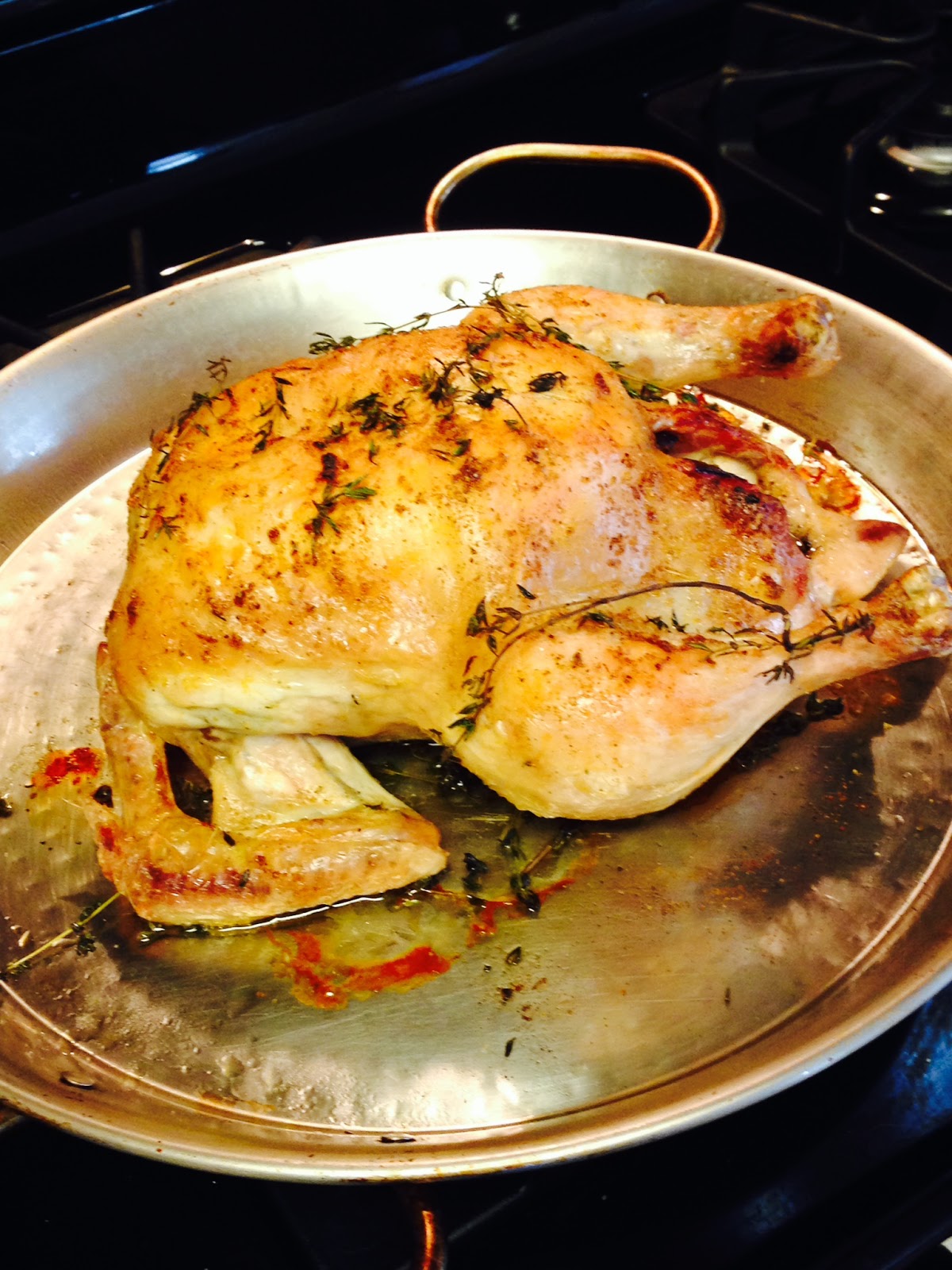
Does your roast chicken turn out dry? Here's a fix that produces incredibly moist roast chicken.
Get a fresh natural chicken, preferably from a farmer's market. Don't use frozen or mass produced chicken. Clean out anything inside and dry the chicken inside and out with a paper towel.
Prop the chicken on the side of a casserole with the cavity open. Grind in some fresh pepper. Add a pinch of salt. Slice a bulb of garlic in half and add it. Add some sprigs of fresh tarragon. Now close the cavity.
Preheat oven to 350F.
Pour some fine olive oil in your hands, pick up the chicken and massage the oil all over. Wipe your your hands off on a paper towel. Add a splash of olive oil and a bit of butter to the casserole then saute the chicken on all sides until brown.
Throw some bay leaves into the casserole with plenty of sprigs of fresh tarragon, then sit the chicken on top. Grind on fresh pepper. Lightly sprinkle with Paprika, use Hungarian Paprika if you have it. Throw a handful of chopped garlic over the chicken. Add sprigs of fresh tarragon.
Cover with aluminum foil, then put the lid on the casserole and bake in the oven.
If you found anything in the cavity when you cleaned the chicken throw it in the casserole half way through cooking.
Remove, let sit for a few minutes on a carving board and then serve.
Carving board juices make a wonderful natural gravy.
The "stuffing" inside the cavity is not for eating, it's only for flavor.
Content written and posted by Ken Abbott abbottsystems@gmail.com
How the Ancient Egyptians raised the Pyramid blocks
How the Ancient Egyptians raised the Pyramid blocks
Lots of theories abound, but here's mine, and it's very simple..
In the center of each pyramid face they laid a wooden rail track. And on this track ran a huge wooden sled. This was the block carrier sled. It was lowered and a block was loaded. But how was the block then raised to the working level? Easy..
On the left of the sled was another sled. But this was designed for people, with lots of bench seats. And to the left of this sled was a simple staircase. The people sled was connected by rope cable to the block sled.
People ran up the staircase, jumped into the passenger sled and their combined weight raised the block.
This happened thousands of times and so the constant traffic of heavy blocks indented the pyramid face slightly.
And sure enough, detailed analysis shows this is the case. Each face of the pyramid shows a strange indentation. It's clearly visible on drone shots.
Tech Notes:
Content written and posted by Ken Abbott abbottsystems@gmail.com
Like this post? Please share it by clicking one of the share buttons below!
Lots of theories abound, but here's mine, and it's very simple..
In the center of each pyramid face they laid a wooden rail track. And on this track ran a huge wooden sled. This was the block carrier sled. It was lowered and a block was loaded. But how was the block then raised to the working level? Easy..
On the left of the sled was another sled. But this was designed for people, with lots of bench seats. And to the left of this sled was a simple staircase. The people sled was connected by rope cable to the block sled.
People ran up the staircase, jumped into the passenger sled and their combined weight raised the block.
This happened thousands of times and so the constant traffic of heavy blocks indented the pyramid face slightly.
And sure enough, detailed analysis shows this is the case. Each face of the pyramid shows a strange indentation. It's clearly visible on drone shots.
Tech Notes:
Content written and posted by Ken Abbott abbottsystems@gmail.com
Like this post? Please share it by clicking one of the share buttons below!
Irrevocable Trust - The benefits
Irrevocable Trust - The benefits
It's easy to setup an irrevocable trust and get major benefits.
You can put any asset into the trust: investment account, real estate and more.
Your trustees, which are usually your children, can take money out anytime tax free. So this is a superb way to give them their inheritance tax free.
If you ever need Medicaid you will qualify becuase you have no assets. But remember the 5 year lookback.
If the Trust generates income you can take it. No need to get permission from the trustees.
One more big benefit. In many States an irrevocable trust is a powerful tool for avoiding probate. When you place assets into an irrevocable trust, you are legally transferring ownership of those assets from yourself to the trust. Because you no longer personally own those assets at the time of your death, they do not have to go through the probate process.
Thanks to Attorney Karen Tobias (845) 876-3300 for helping me with this post. Karen is a Trust expert.
Tech Notes:
Disclaimer: This is not intended as legal or financial advice. It's for informational purposes only. For advice consult an attorney.
Content written and posted by Ken Abbott abbottsystems@gmail.com
Like this post? Please share it by clicking one of the share buttons below!
It's easy to setup an irrevocable trust and get major benefits.
You can put any asset into the trust: investment account, real estate and more.
Your trustees, which are usually your children, can take money out anytime tax free. So this is a superb way to give them their inheritance tax free.
If you ever need Medicaid you will qualify becuase you have no assets. But remember the 5 year lookback.
If the Trust generates income you can take it. No need to get permission from the trustees.
One more big benefit. In many States an irrevocable trust is a powerful tool for avoiding probate. When you place assets into an irrevocable trust, you are legally transferring ownership of those assets from yourself to the trust. Because you no longer personally own those assets at the time of your death, they do not have to go through the probate process.
Thanks to Attorney Karen Tobias (845) 876-3300 for helping me with this post. Karen is a Trust expert.
Tech Notes:
Disclaimer: This is not intended as legal or financial advice. It's for informational purposes only. For advice consult an attorney.
Content written and posted by Ken Abbott abbottsystems@gmail.com
Like this post? Please share it by clicking one of the share buttons below!
Rare Earth Magnets - China's Ace Card
Rare Earth Magnets - China's Ace Card
These are powerful magnets used in US military systems and domestic products such as electric cars.
They are made from elements called "rare earths" on the periodic table.
China dominates the supply and refining of rare earths. So if China stopped exports of rare earths America would suffer very badly indeed.
This is a major hand in China's negotiation of tariffs with Trump.
I have a few of these magnets on my refrigerator door. Getting them off is another story.
Tech Notes:
Content written and posted by Ken Abbott abbottsystems@gmail.com
Like this post? Please share it by clicking one of the share buttons below!
These are powerful magnets used in US military systems and domestic products such as electric cars.
They are made from elements called "rare earths" on the periodic table.
China dominates the supply and refining of rare earths. So if China stopped exports of rare earths America would suffer very badly indeed.
This is a major hand in China's negotiation of tariffs with Trump.
I have a few of these magnets on my refrigerator door. Getting them off is another story.
Tech Notes:
Content written and posted by Ken Abbott abbottsystems@gmail.com
Like this post? Please share it by clicking one of the share buttons below!
Aging - The thing that controls it
Aging - The thing that controls it
It's simple. It's called a telomere.
A telomere is a region of repetitive DNA at the end of a linear chromosome. Telomeres act like the plastic tips on shoelaces, protecting the ends of the chromosomes from damage or from fusing with other chromosomes.
Function and Importance
Telomeres are crucial for maintaining the integrity of a cell's DNA. Here's why they're so important:
Protecting Genetic Information: During cell division, the enzymes that replicate DNA cannot copy the very end of the chromosome. This is known as the "end replication problem." Without telomeres, vital genetic information would be lost with each division. Telomeres act as a buffer, ensuring that this lost DNA is just the repetitive, non-coding telomere sequence rather than important genes.
Regulating Cell Aging: With each cell division, the telomeres become slightly shorter. When they become critically short, the cell can no longer divide and enters a state called senescence (cellular aging) or undergoes programmed cell death (apoptosis). This shortening acts as a kind of biological clock, limiting the number of times a cell can divide. An enzyme called telomerase can add telomere sequences back to the ends of chromosomes, but it is typically only active in stem cells and germ cells, not most regular body cells.
Preventing Chromosome Fusion: Telomeres prevent the ends of chromosomes from being mistaken for a broken DNA strand. Without them, the cell's repair mechanisms might try to "fix" the ends by joining them to other chromosomes, leading to major genomic instability and cell death.
The shortening of telomeres is a key factor in the aging process and is also linked to various age-related diseases. Cancer cells, however, often reactivate the telomerase enzyme, allowing them to maintain telomere length and divide uncontrollably, contributing to their immortality.
So.. is there anything you can do to improve telomere health? Yes there is.
Diet can play a significant role in supporting the health of your DNA telomeres. While no food can reverse the natural process of telomere shortening, a diet rich in certain nutrients can help protect them from damage and slow down the rate at which they shorten.
The key is to focus on foods that are rich in antioxidants, anti-inflammatory compounds, and specific vitamins and minerals. This helps combat oxidative stress and inflammation, which are major factors in accelerating telomere shortening.
Here are some food groups and nutrients that are particularly beneficial for telomere health:
Antioxidant-Rich Fruits and Vegetables
Antioxidants neutralize free radicals, which are unstable molecules that can damage DNA, including telomeres. A colorful diet is a great way to ensure a wide range of antioxidants.
Berries: Blueberries, strawberries, and raspberries are packed with antioxidants and polyphenols.
Leafy Greens: Spinach, kale, and other dark leafy greens are excellent sources of vitamins C and E, and folate (B9).
Cruciferous Vegetables: Broccoli, cauliflower, and Brussels sprouts contain compounds that help with DNA repair.
Other colorful produce: Oranges, bell peppers, carrots, sweet potatoes, and tomatoes are all rich in various antioxidants like carotenoids and vitamin C.
Omega-3 Fatty Acids
Omega-3s are powerful anti-inflammatory compounds. Chronic inflammation is known to accelerate telomere shortening.
Fatty Fish: Salmon, mackerel, sardines, and anchovies are excellent sources of EPA and DHA, the most bioavailable forms of omega-3s.
Nuts and Seeds: Walnuts, flaxseeds, and chia seeds are rich in ALA, a plant-based omega-3. Legumes, Nuts, and Whole Grains
These foods are high in fiber, which can help manage blood sugar and insulin levels, and provide a range of B vitamins and other nutrients.
Legumes: Beans, lentils, and chickpeas are good sources of folate (B9) and fiber.
Nuts: In addition to omega-3s in walnuts, nuts provide vitamin E and other minerals.
Whole Grains: Oats, brown rice, and other whole grains are a good source of fiber and B vitamins.
Foods Rich in Specific Vitamins and Minerals
Folate (Vitamin B9): Crucial for DNA synthesis and repair. Found in leafy greens, avocados, legumes, and fortified grains.
Vitamin C: A potent antioxidant found in citrus fruits, bell peppers, and broccoli.
Vitamin E: Another key antioxidant found in nuts, seeds, and leafy greens.
Vitamin D: Some studies have linked higher vitamin D levels with longer telomeres, though more research is needed. Sources include fatty fish and fortified foods like milk and cereals.
Zinc and Selenium: These minerals are important for antioxidant enzyme function and DNA repair. Found in nuts, seeds, seafood, and whole grains.
Foods to limit or avoid
Conversely, some dietary patterns and foods are associated with faster telomere shortening. These include:
Sugar-sweetened beverages and a diet high in simple sugars.
Red and processed meats.
Refined carbohydrates like white bread and pastries.
Excessive alcohol consumption
Tech Notes:
Content written and posted by Ken Abbott abbottsystems@gmail.com
Like this post? Please share it by clicking one of the share buttons below!
It's simple. It's called a telomere.
A telomere is a region of repetitive DNA at the end of a linear chromosome. Telomeres act like the plastic tips on shoelaces, protecting the ends of the chromosomes from damage or from fusing with other chromosomes.
Function and Importance
Telomeres are crucial for maintaining the integrity of a cell's DNA. Here's why they're so important:
Protecting Genetic Information: During cell division, the enzymes that replicate DNA cannot copy the very end of the chromosome. This is known as the "end replication problem." Without telomeres, vital genetic information would be lost with each division. Telomeres act as a buffer, ensuring that this lost DNA is just the repetitive, non-coding telomere sequence rather than important genes.
Regulating Cell Aging: With each cell division, the telomeres become slightly shorter. When they become critically short, the cell can no longer divide and enters a state called senescence (cellular aging) or undergoes programmed cell death (apoptosis). This shortening acts as a kind of biological clock, limiting the number of times a cell can divide. An enzyme called telomerase can add telomere sequences back to the ends of chromosomes, but it is typically only active in stem cells and germ cells, not most regular body cells.
Preventing Chromosome Fusion: Telomeres prevent the ends of chromosomes from being mistaken for a broken DNA strand. Without them, the cell's repair mechanisms might try to "fix" the ends by joining them to other chromosomes, leading to major genomic instability and cell death.
The shortening of telomeres is a key factor in the aging process and is also linked to various age-related diseases. Cancer cells, however, often reactivate the telomerase enzyme, allowing them to maintain telomere length and divide uncontrollably, contributing to their immortality.
So.. is there anything you can do to improve telomere health? Yes there is.
Diet can play a significant role in supporting the health of your DNA telomeres. While no food can reverse the natural process of telomere shortening, a diet rich in certain nutrients can help protect them from damage and slow down the rate at which they shorten.
The key is to focus on foods that are rich in antioxidants, anti-inflammatory compounds, and specific vitamins and minerals. This helps combat oxidative stress and inflammation, which are major factors in accelerating telomere shortening.
Here are some food groups and nutrients that are particularly beneficial for telomere health:
Antioxidant-Rich Fruits and Vegetables
Antioxidants neutralize free radicals, which are unstable molecules that can damage DNA, including telomeres. A colorful diet is a great way to ensure a wide range of antioxidants.
Berries: Blueberries, strawberries, and raspberries are packed with antioxidants and polyphenols.
Leafy Greens: Spinach, kale, and other dark leafy greens are excellent sources of vitamins C and E, and folate (B9).
Cruciferous Vegetables: Broccoli, cauliflower, and Brussels sprouts contain compounds that help with DNA repair.
Other colorful produce: Oranges, bell peppers, carrots, sweet potatoes, and tomatoes are all rich in various antioxidants like carotenoids and vitamin C.
Omega-3 Fatty Acids
Omega-3s are powerful anti-inflammatory compounds. Chronic inflammation is known to accelerate telomere shortening.
Fatty Fish: Salmon, mackerel, sardines, and anchovies are excellent sources of EPA and DHA, the most bioavailable forms of omega-3s.
Nuts and Seeds: Walnuts, flaxseeds, and chia seeds are rich in ALA, a plant-based omega-3. Legumes, Nuts, and Whole Grains
These foods are high in fiber, which can help manage blood sugar and insulin levels, and provide a range of B vitamins and other nutrients.
Legumes: Beans, lentils, and chickpeas are good sources of folate (B9) and fiber.
Nuts: In addition to omega-3s in walnuts, nuts provide vitamin E and other minerals.
Whole Grains: Oats, brown rice, and other whole grains are a good source of fiber and B vitamins.
Foods Rich in Specific Vitamins and Minerals
Folate (Vitamin B9): Crucial for DNA synthesis and repair. Found in leafy greens, avocados, legumes, and fortified grains.
Vitamin C: A potent antioxidant found in citrus fruits, bell peppers, and broccoli.
Vitamin E: Another key antioxidant found in nuts, seeds, and leafy greens.
Vitamin D: Some studies have linked higher vitamin D levels with longer telomeres, though more research is needed. Sources include fatty fish and fortified foods like milk and cereals.
Zinc and Selenium: These minerals are important for antioxidant enzyme function and DNA repair. Found in nuts, seeds, seafood, and whole grains.
Foods to limit or avoid
Conversely, some dietary patterns and foods are associated with faster telomere shortening. These include:
Sugar-sweetened beverages and a diet high in simple sugars.
Red and processed meats.
Refined carbohydrates like white bread and pastries.
Excessive alcohol consumption
Tech Notes:
Content written and posted by Ken Abbott abbottsystems@gmail.com
Like this post? Please share it by clicking one of the share buttons below!
Optical Computing - Recent advances
Optical Computing - Recent advances
Optical computing, which uses photons (light particles) instead of electrons to perform calculations, is experiencing a significant resurgence, driven primarily by the demands of artificial intelligence (AI) and the limitations of traditional computers. While still in the research and development phase, recent advances are bringing this technology closer to commercial viability.
With giants like Microsoft and startups like Lightmatter and Lightelligence pushing the boundaries, the field is moving rapidly. While a fully-optical digital computer is still a distant goal, hybrid optoelectronic systems are poised to make a significant impact, especially in the high-performance computing and AI acceleration sectors, likely seeing initial commercial adoption around 2027-2028.
Optical computing is also being actively explored as a technology for quantum computers where it offers the holy grail - the possibility of room temperature Qubits.
Tech Notes:
Content written and posted by Ken Abbott abbottsystems@gmail.com
Like this post? Please share it by clicking one of the share buttons below!
Optical computing, which uses photons (light particles) instead of electrons to perform calculations, is experiencing a significant resurgence, driven primarily by the demands of artificial intelligence (AI) and the limitations of traditional computers. While still in the research and development phase, recent advances are bringing this technology closer to commercial viability.
With giants like Microsoft and startups like Lightmatter and Lightelligence pushing the boundaries, the field is moving rapidly. While a fully-optical digital computer is still a distant goal, hybrid optoelectronic systems are poised to make a significant impact, especially in the high-performance computing and AI acceleration sectors, likely seeing initial commercial adoption around 2027-2028.
Optical computing is also being actively explored as a technology for quantum computers where it offers the holy grail - the possibility of room temperature Qubits.
Tech Notes:
Content written and posted by Ken Abbott abbottsystems@gmail.com
Like this post? Please share it by clicking one of the share buttons below!
Plastics - Now inside your body
Plastics - Now inside your body
We're no longer talking about plastic waste dumped in the Pacific, forming a garbage patch twice the size of Texas.
Now we're talking about plastics that have entered your body.
Here's what they can do to you..
The health risks associated with plastics are a growing area of concern for scientists and public health officials. The risks stem from both the chemical additives used to make plastics and from the physical presence of plastic particles themselves inside the body.
Here is a breakdown of the primary health risks from plastics:
1. Endocrine-Disrupting Chemicals (EDCs) Plastics are not just a single material; they contain a wide variety of chemical additives that are not chemically bound to the polymer. These chemicals can leach out over time and enter the human body, where they can act as endocrine disruptors.
Bisphenol A (BPA): Found in hard plastics like polycarbonate (often marked with a recycling symbol #7) and the lining of some food and beverage cans. BPA can mimic the hormone estrogen, leading to concerns about its effects on brain development, reproduction, and potential links to conditions like diabetes and cardiovascular disease.
Phthalates: These chemicals are used to make plastics like PVC (#3) more flexible and are found in everything from food packaging to medical tubing and children's toys. Phthalates can interfere with the body's hormonal systems, with studies linking them to adverse effects on male reproductive health, early puberty, and an increased risk of asthma and allergies.
2. Microplastics and Nanoplastics When plastics break down, they don't disappear; they fragment into smaller and smaller pieces. These tiny particles can be ingested, inhaled, or absorbed through the skin. Physical Damage: Microplastics, particularly those with sharp edges, can physically irritate, inflame, and even puncture cells. They have been found in human organs, including the lungs, heart, brain, placenta, and even breast milk.
Carrier for Other Toxins: Microplastics can act as a carrier for harmful chemicals. They can attract and absorb pollutants from the environment, which are then released into the body when the plastic particle is present.
Cellular Disruption: Research on the health effects of these particles is ongoing, but studies have linked them to oxidative stress, DNA damage, and chronic inflammation. A recent study published in the New England Journal of Medicine found that the presence of microplastics in blood vessels may double the risk of heart attack or stroke in people with heart disease.
3. Exposure Pathways
Plastic chemicals and particles can enter the body through several routes:
Ingestion: The most common way. Chemicals can leach from plastic containers into food and drinks, especially when heated. Microplastics are also found in drinking water, seafood, and other food products.
Inhalation: Microplastic fibers from synthetic clothing and household dust can be inhaled into the lungs, where they can cause inflammation and other respiratory problems.
Dermal Absorption: Certain chemicals, particularly from personal care products and cosmetics packaged in plastic, can be absorbed through the skin.
While the full long-term health effects of widespread plastic exposure are still being studied, the consensus among scientists is that plastics pose a significant public health risk.
Tech Notes:
Content written and posted by Ken Abbott abbottsystems@gmail.com
Like this post? Please share it by clicking one of the share buttons below!
We're no longer talking about plastic waste dumped in the Pacific, forming a garbage patch twice the size of Texas.
Now we're talking about plastics that have entered your body.
Here's what they can do to you..
The health risks associated with plastics are a growing area of concern for scientists and public health officials. The risks stem from both the chemical additives used to make plastics and from the physical presence of plastic particles themselves inside the body.
Here is a breakdown of the primary health risks from plastics:
1. Endocrine-Disrupting Chemicals (EDCs) Plastics are not just a single material; they contain a wide variety of chemical additives that are not chemically bound to the polymer. These chemicals can leach out over time and enter the human body, where they can act as endocrine disruptors.
Bisphenol A (BPA): Found in hard plastics like polycarbonate (often marked with a recycling symbol #7) and the lining of some food and beverage cans. BPA can mimic the hormone estrogen, leading to concerns about its effects on brain development, reproduction, and potential links to conditions like diabetes and cardiovascular disease.
Phthalates: These chemicals are used to make plastics like PVC (#3) more flexible and are found in everything from food packaging to medical tubing and children's toys. Phthalates can interfere with the body's hormonal systems, with studies linking them to adverse effects on male reproductive health, early puberty, and an increased risk of asthma and allergies.
2. Microplastics and Nanoplastics When plastics break down, they don't disappear; they fragment into smaller and smaller pieces. These tiny particles can be ingested, inhaled, or absorbed through the skin. Physical Damage: Microplastics, particularly those with sharp edges, can physically irritate, inflame, and even puncture cells. They have been found in human organs, including the lungs, heart, brain, placenta, and even breast milk.
Carrier for Other Toxins: Microplastics can act as a carrier for harmful chemicals. They can attract and absorb pollutants from the environment, which are then released into the body when the plastic particle is present.
Cellular Disruption: Research on the health effects of these particles is ongoing, but studies have linked them to oxidative stress, DNA damage, and chronic inflammation. A recent study published in the New England Journal of Medicine found that the presence of microplastics in blood vessels may double the risk of heart attack or stroke in people with heart disease.
3. Exposure Pathways
Plastic chemicals and particles can enter the body through several routes:
Ingestion: The most common way. Chemicals can leach from plastic containers into food and drinks, especially when heated. Microplastics are also found in drinking water, seafood, and other food products.
Inhalation: Microplastic fibers from synthetic clothing and household dust can be inhaled into the lungs, where they can cause inflammation and other respiratory problems.
Dermal Absorption: Certain chemicals, particularly from personal care products and cosmetics packaged in plastic, can be absorbed through the skin.
While the full long-term health effects of widespread plastic exposure are still being studied, the consensus among scientists is that plastics pose a significant public health risk.
Tech Notes:
Content written and posted by Ken Abbott abbottsystems@gmail.com
Like this post? Please share it by clicking one of the share buttons below!
INTEL - How the great have fallen
INTEL - How the great have fallen
Intel, once the darling of US chip makers, is now in trouble.
Companies like TSMC (Taiwan) and Samsung (South Korea) are producing far more advanced chips. And are moving quickly to even more impressive 2 nm technology.
Apple shifted its supply chain several years ago from Intel to TSMC. The reason? TSMC is one of very few fab plants on the planet that can produce the complex chips Apple needs.
Tech Notes:
Content written and posted by Ken Abbott abbottsystems@gmail.com
Like this post? Please share it by clicking one of the share buttons below!
Intel, once the darling of US chip makers, is now in trouble.
Companies like TSMC (Taiwan) and Samsung (South Korea) are producing far more advanced chips. And are moving quickly to even more impressive 2 nm technology.
Apple shifted its supply chain several years ago from Intel to TSMC. The reason? TSMC is one of very few fab plants on the planet that can produce the complex chips Apple needs.
Tech Notes:
Content written and posted by Ken Abbott abbottsystems@gmail.com
Like this post? Please share it by clicking one of the share buttons below!
AI reads Cuneiform
AI reads Cuneiform
 Cuneiform is one of the earliest known forms of writing, developed by
the ancient Sumerians of Mesopotamia (modern-day Iraq) around 3,200
BC.
Cuneiform is one of the earliest known forms of writing, developed by
the ancient Sumerians of Mesopotamia (modern-day Iraq) around 3,200
BC.
But the vast majority of the hundreds of thousands of cuneiform tablets discovered remain untranslated due to an extremely limited number of qualified experts.
Enter AI, which can now read Cuneiform with 98% accuracy. This means the vast trove of unread tablets can be decoded in far less time and the contents made known to all.
Tech Notes:
Content written and posted by Ken Abbott abbottsystems@gmail.com
Like this post? Please share it by clicking one of the share buttons below!

But the vast majority of the hundreds of thousands of cuneiform tablets discovered remain untranslated due to an extremely limited number of qualified experts.
Enter AI, which can now read Cuneiform with 98% accuracy. This means the vast trove of unread tablets can be decoded in far less time and the contents made known to all.
Tech Notes:
Content written and posted by Ken Abbott abbottsystems@gmail.com
Like this post? Please share it by clicking one of the share buttons below!
Hire a Mermaid
Hire a Mermaid

My friend is a professional mermaid.
She's available for everything including: ocean filming, pool parties, aquarium shows, swimming with sharks and more.
Details here.. Mermaid Linden
Tech Notes:
Why do fish (including sharks) accept her? Simple. Unlike other divers she does not have bubbles coming from her mouth. And she has a fin. So fish accept her as one of them. This means she can get photos that regular divers only dream of.
Mermaid Linden's personal best static breath hold is just over five minutes, and she has dived to a depth of 115 feet.
Content written and posted by Ken Abbott abbottsystems@gmail.com
Like this post? Please share it by clicking one of the share buttons below!

My friend is a professional mermaid.
She's available for everything including: ocean filming, pool parties, aquarium shows, swimming with sharks and more.
Details here.. Mermaid Linden
Tech Notes:
Why do fish (including sharks) accept her? Simple. Unlike other divers she does not have bubbles coming from her mouth. And she has a fin. So fish accept her as one of them. This means she can get photos that regular divers only dream of.
Mermaid Linden's personal best static breath hold is just over five minutes, and she has dived to a depth of 115 feet.
Content written and posted by Ken Abbott abbottsystems@gmail.com
Like this post? Please share it by clicking one of the share buttons below!
Cage Free Eggs - The Reality
Cage Free Eggs - The Reality

If you buy cage free eggs you may want to look at this pic of a cage free egg production facility.
Hens are indoors their entire life, fed food pellets and have an average of about 1 sq. foot of space to roam "cage free" - if they are lucky.
If you really want tasty eggs try "organic pasture raised".
Or you could do what my sister did. She bought a few birds and build a hen house in her back garden. They roamed the garden and found their own food. The eggs tasted divine.
Tech Notes:
Content written and posted by Ken Abbott abbottsystems@gmail.com
Like this post? Please share it by clicking one of the share buttons below!

If you buy cage free eggs you may want to look at this pic of a cage free egg production facility.
Hens are indoors their entire life, fed food pellets and have an average of about 1 sq. foot of space to roam "cage free" - if they are lucky.
If you really want tasty eggs try "organic pasture raised".
Or you could do what my sister did. She bought a few birds and build a hen house in her back garden. They roamed the garden and found their own food. The eggs tasted divine.
Tech Notes:
Content written and posted by Ken Abbott abbottsystems@gmail.com
Like this post? Please share it by clicking one of the share buttons below!
Ways to die
Ways to die
Many European countries have legalized assisted dying.
Here is a list of European countries where some form of assisted dying is legal, along with brief details on their approach:
Belgium: Legalized euthanasia and assisted suicide in 2002. The law is known for being liberal, as it allows for assisted dying for both adults and, under specific conditions, children who are in a "futile medical condition of constant and unbearable physical or mental suffering."
The Netherlands: Was the first country to legalize euthanasia in 2002. The law is similar to Belgium's, allowing for both euthanasia and assisted suicide under strict conditions of "unbearable suffering," which can include psychological suffering. The law was extended in 2023 to include children under 12.
Luxembourg: Legalized euthanasia and assisted suicide in 2009 for patients with an incurable illness who are suffering unbearably and are mentally competent.
Switzerland: Has allowed assisted suicide since 1942, but euthanasia is illegal. The law is unique in that it permits assisted suicide as long as the motive is not "selfish." This has led to the rise of organizations like Dignitas, which facilitate assisted suicides for both Swiss citizens and foreign nationals.
Spain: Passed a law in 2021 legalizing euthanasia and assisted suicide for adults with a "serious and incurable disease that causes unbearable suffering."
Austria: Its constitutional court lifted the ban on assisted suicide in 2020, and the parliament legalized it in 2022. It is legal for adults who are terminally ill or have a permanent, debilitating condition, but they must self-administer the life-ending medication.
Germany: The country's Constitutional Court ruled in 2020 that a constitutional right to "a self-determined death" exists. While a specific law to regulate this practice is still being debated, it effectively decriminalized assisted suicide under certain conditions.
Portugal: The parliament has approved a law to legalize euthanasia, but it has faced legal and political challenges and is awaiting final regulations to come into effect.
Italy: While euthanasia remains illegal, the country's Constitutional Court ruled in 2019 that assisted suicide is not always a crime when patients are able to make decisions and are in "intolerable suffering." This has led to a few documented cases, but a legislative framework is still in progress.
Tech Notes: Uruguay is just considering this. And their ruling may spread across Latin America.
Content written and posted by Ken Abbott abbottsystems@gmail.com
Like this post? Please share it by clicking one of the share buttons below!
Many European countries have legalized assisted dying.
Here is a list of European countries where some form of assisted dying is legal, along with brief details on their approach:
Belgium: Legalized euthanasia and assisted suicide in 2002. The law is known for being liberal, as it allows for assisted dying for both adults and, under specific conditions, children who are in a "futile medical condition of constant and unbearable physical or mental suffering."
The Netherlands: Was the first country to legalize euthanasia in 2002. The law is similar to Belgium's, allowing for both euthanasia and assisted suicide under strict conditions of "unbearable suffering," which can include psychological suffering. The law was extended in 2023 to include children under 12.
Luxembourg: Legalized euthanasia and assisted suicide in 2009 for patients with an incurable illness who are suffering unbearably and are mentally competent.
Switzerland: Has allowed assisted suicide since 1942, but euthanasia is illegal. The law is unique in that it permits assisted suicide as long as the motive is not "selfish." This has led to the rise of organizations like Dignitas, which facilitate assisted suicides for both Swiss citizens and foreign nationals.
Spain: Passed a law in 2021 legalizing euthanasia and assisted suicide for adults with a "serious and incurable disease that causes unbearable suffering."
Austria: Its constitutional court lifted the ban on assisted suicide in 2020, and the parliament legalized it in 2022. It is legal for adults who are terminally ill or have a permanent, debilitating condition, but they must self-administer the life-ending medication.
Germany: The country's Constitutional Court ruled in 2020 that a constitutional right to "a self-determined death" exists. While a specific law to regulate this practice is still being debated, it effectively decriminalized assisted suicide under certain conditions.
Portugal: The parliament has approved a law to legalize euthanasia, but it has faced legal and political challenges and is awaiting final regulations to come into effect.
Italy: While euthanasia remains illegal, the country's Constitutional Court ruled in 2019 that assisted suicide is not always a crime when patients are able to make decisions and are in "intolerable suffering." This has led to a few documented cases, but a legislative framework is still in progress.
Tech Notes: Uruguay is just considering this. And their ruling may spread across Latin America.
Content written and posted by Ken Abbott abbottsystems@gmail.com
Like this post? Please share it by clicking one of the share buttons below!
How to annoy people
How to annoy people
I'm not going to ask why you might want to annoy someone. That's your business. But I'm going to tell you how to do it professionally.
Most people think that annoying someone is simply a matter of saying something direct and blatent. A brief analysis shows this does not work. Your target will respond with a couple of expletives, then call you an idiot and leave. The whole interaction is over in 15 seconds. And 15 seconds does not annoyance make. Not on my clock.
So how is it done professionally?
First you need to uncover a basic fact about your target. It can be any fact but it needs to be something they are really serious about. Don't over analyze this. One good fact is all you need. Let's take an example: suppose your target is a dog lover and specifically they own and love English Sheep Dogs. Then you begin the process with a critical opening statement..
"I love English Sheep Dogs, they are so cute. I've always wanted one but a friend of mine says they pee on your furniture".
This is a strategic opening statement and notice the key element. Indirection. It's not you making this claim, you are simply repeating what your friend said. Of course there is no friend.
Your target will get annoyed, but not with you..
"Your friend is wrong, they don't pee on furniture. Trust me I know".
You then continue as if you never heard this..
"I suppose peeing is not so bad but my friend also said they lick their fur and this causes them to throw up all over the place".
Now your target will get noticable agitated. But again they cannot attack you..
"That's crazy. Your friend has no idea what they are talking about".
You continue...
"And according to my friend they often get diarrhea and it's very messy.
Now your target is seriously annoyed..
"What does your friend do? He's a f***ing idiot".
Then you end with a clanger..
"He's a Vet. Has a huge practice in London, Kensington I think".
Tech Notes: This is just a brief outline. To learn the full details consider taking my 3 day intensive workshop. The cost for this unique workshop is just $152,000 and that includes food and accomodation. You also recieve a free copy of my award winning book, "How not to get annoyed with exorbitant workshop fees".
Content written and posted by Ken Abbott abbottsystems@gmail.com
Like this post? Please share it by clicking one of the share buttons below!
I'm not going to ask why you might want to annoy someone. That's your business. But I'm going to tell you how to do it professionally.
Most people think that annoying someone is simply a matter of saying something direct and blatent. A brief analysis shows this does not work. Your target will respond with a couple of expletives, then call you an idiot and leave. The whole interaction is over in 15 seconds. And 15 seconds does not annoyance make. Not on my clock.
So how is it done professionally?
First you need to uncover a basic fact about your target. It can be any fact but it needs to be something they are really serious about. Don't over analyze this. One good fact is all you need. Let's take an example: suppose your target is a dog lover and specifically they own and love English Sheep Dogs. Then you begin the process with a critical opening statement..
"I love English Sheep Dogs, they are so cute. I've always wanted one but a friend of mine says they pee on your furniture".
This is a strategic opening statement and notice the key element. Indirection. It's not you making this claim, you are simply repeating what your friend said. Of course there is no friend.
Your target will get annoyed, but not with you..
"Your friend is wrong, they don't pee on furniture. Trust me I know".
You then continue as if you never heard this..
"I suppose peeing is not so bad but my friend also said they lick their fur and this causes them to throw up all over the place".
Now your target will get noticable agitated. But again they cannot attack you..
"That's crazy. Your friend has no idea what they are talking about".
You continue...
"And according to my friend they often get diarrhea and it's very messy.
Now your target is seriously annoyed..
"What does your friend do? He's a f***ing idiot".
Then you end with a clanger..
"He's a Vet. Has a huge practice in London, Kensington I think".
Tech Notes: This is just a brief outline. To learn the full details consider taking my 3 day intensive workshop. The cost for this unique workshop is just $152,000 and that includes food and accomodation. You also recieve a free copy of my award winning book, "How not to get annoyed with exorbitant workshop fees".
Content written and posted by Ken Abbott abbottsystems@gmail.com
Like this post? Please share it by clicking one of the share buttons below!
Ken's Marmalade on Toast
Ken's Marmalade on Toast
 Wait.. you're posting a recipe for marmalade on toast? This better be good.
It is.
Toast a slice of your favorite bread, toast and then butter it lightly.
Now spread on some bitter marmalade and sprinkle it with real Stilton cheese.
Eat.
Tech Notes:
If you use regular sweet marmalade it's not the same.
If you use any old blue cheese it's not the same.
Content written and posted by Ken Abbott abbottsystems@gmail.com
Like this post? Please share it by clicking one of the share buttons below!

It is.
Toast a slice of your favorite bread, toast and then butter it lightly.
Now spread on some bitter marmalade and sprinkle it with real Stilton cheese.
Eat.
Tech Notes:
If you use regular sweet marmalade it's not the same.
If you use any old blue cheese it's not the same.
Content written and posted by Ken Abbott abbottsystems@gmail.com
Like this post? Please share it by clicking one of the share buttons below!
Ken's Osso Buco
Ken's Osso Buco
 Osso Buco is an Italian phrase that translates to "bone with a hole".
Traditionally it's made with veal shank, but you can use lamb shank or beef shank. But a shank cut is critical because this includes the bone and so you get bone marrow.
Trim excess fat off the shank. Then rub it down with salt and pepper and sear it on all sides in olive oil in a Dutch oven casserole. Remove and set on the side.
Chop some onion, carrot, celery and grate a bulb of fresh garlic (yes, an entire bulb not a clove), then add to the casserole and saute on low heat until the onions are tender.
Return the shank to the casserole along with any juices thay may have come out. Add some white wine, chicken stock, dried basil and dried oragano.
Now add a can of tomatoes. Use San Marzano for the best taste. Crush the tomatoes.
Put the lid on the casserole then place in a 350F oven and let cook for about 2 hours. Check and stir occasionally and add more liquid if needed.
Tech Notes:
As with all cooking the quality of the ingredients makes a big difference. Buy the best you can afford, and that includes the olive oil.
There are lots of tomatoes that claim to be San Marzano. Genuine San Marzano tomatoes display a "DOP" seal.
To grate a bulb of garlic use a big cheese grater, not one of theose tiny garlic graters.
Content written and posted by Ken Abbott abbottsystems@gmail.com
Like this post? Please share it by clicking one of the share buttons below!

Traditionally it's made with veal shank, but you can use lamb shank or beef shank. But a shank cut is critical because this includes the bone and so you get bone marrow.
Trim excess fat off the shank. Then rub it down with salt and pepper and sear it on all sides in olive oil in a Dutch oven casserole. Remove and set on the side.
Chop some onion, carrot, celery and grate a bulb of fresh garlic (yes, an entire bulb not a clove), then add to the casserole and saute on low heat until the onions are tender.
Return the shank to the casserole along with any juices thay may have come out. Add some white wine, chicken stock, dried basil and dried oragano.
Now add a can of tomatoes. Use San Marzano for the best taste. Crush the tomatoes.
Put the lid on the casserole then place in a 350F oven and let cook for about 2 hours. Check and stir occasionally and add more liquid if needed.
Tech Notes:
As with all cooking the quality of the ingredients makes a big difference. Buy the best you can afford, and that includes the olive oil.
There are lots of tomatoes that claim to be San Marzano. Genuine San Marzano tomatoes display a "DOP" seal.
To grate a bulb of garlic use a big cheese grater, not one of theose tiny garlic graters.
Content written and posted by Ken Abbott abbottsystems@gmail.com
Like this post? Please share it by clicking one of the share buttons below!
Inside an ICE Detention Center
Inside an ICE Detention Center
 Yes, this is America. Surprised?
This one is in Florida with 32 people per cage.
Content written and posted by Ken Abbott abbottsystems@gmail.com
Like this post? Please share it by clicking one of the share buttons below!

This one is in Florida with 32 people per cage.
Content written and posted by Ken Abbott abbottsystems@gmail.com
Like this post? Please share it by clicking one of the share buttons below!
Ken's Chicken Melange
Ken's Chicken Melange
 This is easy, and it can serve a whole crew.
Take a large casserole dish. Rub it all over with butter.
Then clean, slice and add any vegatables you want. I use onions, carrots, mushrooms, brussel sprouts. Slice and add a few potatoes.
Take several chicken thights. Trim off almost all the skin. Dry and add to the casserole.
Grate a whole bulb of garlic (not a clove, a whole bulb). Add to the casserole, sprinkle with olive oil and mix. Add a splash of white wine and a splash of vegetable broth. Make sure the chicken thights are covered by the vegetables.
Add a few grinds of fresh pepper and a pinch of salt.
Bake at 350F until the potatoes are just brown. Serve.
Tech Notes:
To brown this before serving put the oven on broil for a few minutes. But keep an eye on things to avoid burning.
Why are the chicken thights covered by the vegetables? To keep them from drying out and make them moist.
As with all cooking the quality of the ingredients makes a huge difference. Buy the best you can afford, and that includes the olive oil.
Content written and posted by Ken Abbott abbottsystems@gmail.com
Like this post? Please share it by clicking one of the share buttons below!

Take a large casserole dish. Rub it all over with butter.
Then clean, slice and add any vegatables you want. I use onions, carrots, mushrooms, brussel sprouts. Slice and add a few potatoes.
Take several chicken thights. Trim off almost all the skin. Dry and add to the casserole.
Grate a whole bulb of garlic (not a clove, a whole bulb). Add to the casserole, sprinkle with olive oil and mix. Add a splash of white wine and a splash of vegetable broth. Make sure the chicken thights are covered by the vegetables.
Add a few grinds of fresh pepper and a pinch of salt.
Bake at 350F until the potatoes are just brown. Serve.
Tech Notes:
To brown this before serving put the oven on broil for a few minutes. But keep an eye on things to avoid burning.
Why are the chicken thights covered by the vegetables? To keep them from drying out and make them moist.
As with all cooking the quality of the ingredients makes a huge difference. Buy the best you can afford, and that includes the olive oil.
Content written and posted by Ken Abbott abbottsystems@gmail.com
Like this post? Please share it by clicking one of the share buttons below!
Subscribe to:
Comments (Atom)